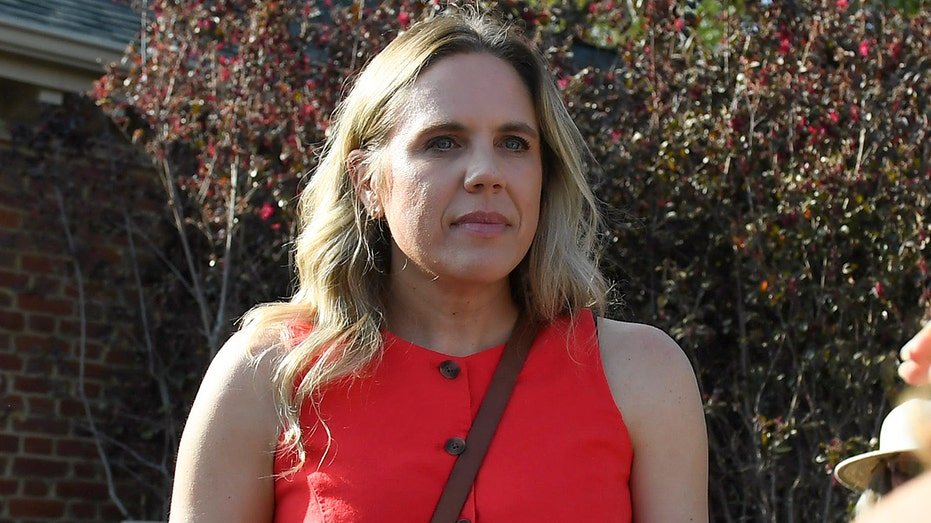
House Republican warns California water crisis could threaten US food supplies
Rep. Harriet Hageman says California's aging infrastructure and environmental regulations are stressing the Colorado River, potentially harming agriculture and food independence nationwide.

California's aging water infrastructure and environmental policies are straining the Colorado River and could ultimately threaten food supplies across the United States, according to Rep. Harriet Hageman, R-Wyo. The congresswoman accused Gov. Gavin Newsom of prioritizing politics over sound water management, arguing that the state's growing reliance on the river is putting unfair pressure on the six other states that share its waters.
«The system is now becoming very, very stressed because California has not kept up with the infrastructure demands and needs of its citizens,» Hageman said. She noted that Wyoming communities like Pinedale feel the consequences when downstream demands force reductions in their own water usage. «When there are calls on the river and when there are demands that we reduce the amount of water that we are able to use in order to meet a demand downstream, that isn't fair.»
California's water infrastructure has remained largely unchanged since the late 20th century despite a significantly larger population. Hageman argued that this combination of growing need and outdated systems is hurting the agricultural sector in regions that depend on the Colorado River, with ripple effects that could extend well beyond the Western states.
«California could grow almost all the food we need in the United States, but they've really decimated their Ag industry because they've taken irrigation water away from their Ag industry to try to meet municipal demand and industrial demand elsewhere,» she said. «So really it's just, it's a whole parade of bad decisions that are being made.»
The lawmaker framed the issue as a matter of national security, warning that dependence on foreign food imports would leave the country vulnerable. «Food independence is a national security issue. We do not want to become food dependent on Mexico or Central America or bringing all of our food in from other countries,» she said. «We have the resources to grow healthy, high-quality food right here while also protecting our environment.»
Environmental groups have opposed new dam construction in California, arguing that such projects contribute to climate change and harm biodiversity. Organizations like Tell the Dam Truth have called for decommissioning existing dams to restore river ecosystems. The Sierra Club has similarly opposed desalination projects, which would convert seawater into usable freshwater.
Hageman dismissed such opposition as misguided. «They're very backwards people. I kind of look at them like flat-Earthers,» she said. «They ignore the fact that humans are also part of the natural environment, and they ignore the benefits of what we can create by building this much-needed infrastructure.»
The Colorado River's Upper Basin includes Colorado, Wyoming, New Mexico and Utah, while the Lower Basin covers California, Arizona and Nevada. The river has faced growing stress from climate change and increased dependence, prompting discussions about updating the water-sharing agreement among the seven states. Those talks have not produced a new deal, leading the Trump administration to impose steep cuts on Lower Basin states for the next two years.
Newsom praised the federal action as a necessary short-term step while emphasizing California's recent conservation efforts. «This is a necessary step to protect a river that 40 million Americans depend on, at a time when climate change is driving a regional water crisis that makes every drop of water count,» he said. «California continues to lead the way forward, growing our economy while cutting our Colorado River water use to the lowest level since 1949.» He added that any long-term solution must share responsibility fairly across all seven states.
California has announced plans for a new reservoir project with an estimated cost of $6.8 billion, expected to be completed in the mid-2030s, along with investments in groundwater infrastructure. A spokesperson for the California Natural Resources Agency defended the state's record, noting that urban water agencies have reduced imported demand by 50% since 2000. The spokesperson called suggestions to move the state entirely to desalinated water «a deeply unserious proposal» and insisted that all Basin states must share the responsibility of caring for the river.
63