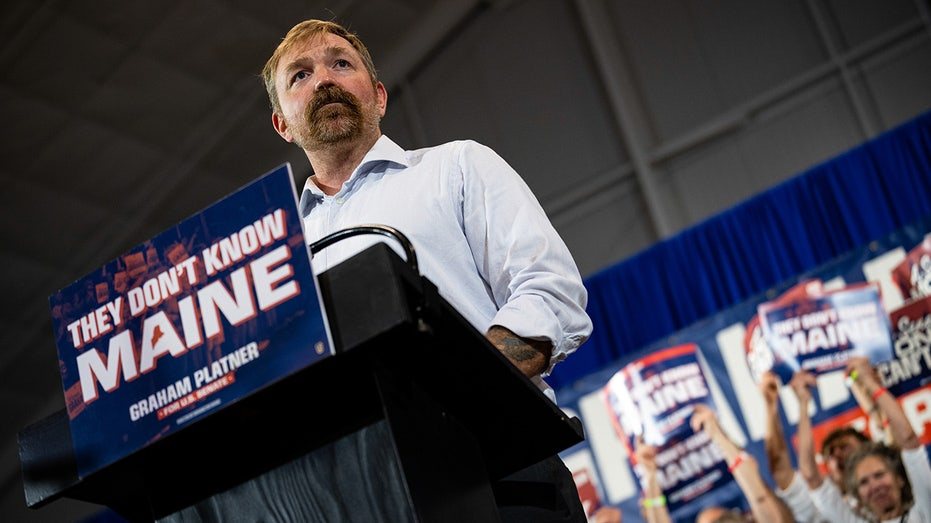
The abrupt collapse of Graham Platner's U.S. Senate campaign in Maine this week serves as a stark reminder that in today's political landscape, no secret remains hidden for long. Platner, a Democratic nominee, withdrew from the race Wednesday night after a bombshell rape allegation emerged, torpedoing a bid that had been seen as a potential pickup opportunity for Democrats in a crucial swing state. The episode has reignited debate about candidate vetting, media scrutiny, and the unforgiving nature of modern political campaigns.
Platner's downfall began when a woman accused him of sexual assault, an allegation that quickly spread across social media and was picked up by national outlets. The candidate denied the claim but acknowledged that the controversy made it impossible to continue his campaign. In a statement, Platner said he was stepping down to avoid distracting from the issues that matter to Maine voters, but the damage was already done. His departure leaves Democrats scrambling to find a replacement in a race that could help determine control of the Senate.
The case has drawn attention to the vetting process, or lack thereof, that Platner underwent before entering the race. Reports indicate that his background check was conducted in just three days, a timeline that critics say was woefully inadequate for a high-stakes federal campaign. Political operatives from both parties have long emphasized the importance of thorough vetting, but Platner's experience illustrates the consequences of cutting corners. As one strategist noted, campaigns that fail to uncover damaging information early often pay the price later.
The media's role in uncovering and amplifying such allegations has also come under scrutiny. In an era of 24-hour news cycles and social media, any accusation—whether verified or not—can dominate headlines within hours. This environment has made it increasingly difficult for candidates to control their narratives, especially when past behavior or relationships come to light. The Platner case is just the latest example of how quickly a campaign can unravel when hidden facts emerge.
Political commentators have drawn parallels to earlier eras when the press often shielded politicians from scandal. President John F. Kennedy's extramarital affairs, for instance, were well known to journalists but rarely reported. That era of media complicity is long gone, replaced by a hypercompetitive landscape where every outlet seeks the next scoop. Today, no rumor is too small to investigate, and every former associate or rival with a grievance sees a campaign as an opportunity to air it.
The Platner saga also highlights the personal toll that political campaigns can exact. Candidates are subjected to intense scrutiny of their entire life histories, from business dealings to romantic relationships. As one veteran political observer put it, politics is a rough-and-tumble game that can upend lives when the searchlights turn on. The lesson for aspiring politicians is clear: any unflattering story that exists will eventually be found and broadcast.
For Democrats in Maine, the immediate challenge is to regroup and field a viable candidate before the general election. The party had invested significant resources in Platner's campaign, viewing the race as a chance to flip a Senate seat in a state that has trended Democratic in recent years. His withdrawal now forces a reset, with potential contenders including state legislators and local officials. The Republican incumbent, Senator Susan Collins, is not up for reelection until 2026, but the seat Platner was contesting is currently held by an independent who caucuses with Democrats.
Beyond Maine, the Platner case serves as a cautionary tale for candidates nationwide. The biblical adage that nothing is secret that will not be revealed has never been more applicable to politics. Campaigns are now advised to conduct exhaustive self-scrutiny and to disclose any potential liabilities early, a strategy known as hanging a lantern on one's problems. Those who fail to do so risk seeing their ambitions destroyed by revelations they thought were buried.
The broader implications for political culture are significant. As the number of media platforms grows, so does the incentive for journalists to dig up damaging information. This dynamic has made it harder for candidates to survive scandals, but it has also raised questions about fairness and due process. Accusations alone can end a campaign, regardless of their ultimate veracity. The Platner case is likely to fuel ongoing debates about how to balance transparency with the presumption of innocence.
In the end, Platner's story is a reminder that politics is not for the faint of heart. Those who seek high office must be prepared for every aspect of their lives to be examined under a microscope. As one commentator noted, the candidate who ignores this reality does so at his or her own peril. For now, the Maine Senate race moves forward without Platner, but the lessons of his brief and tumultuous campaign will resonate for years to come.