
Georgia redistricting challenge faces tougher legal standard after Supreme Court ruling
The 11th Circuit sent Georgia's redistricting case back to a lower court, requiring challengers to prove intentional racial discrimination under the new Supreme Court standard from Louisiana v. Callais.
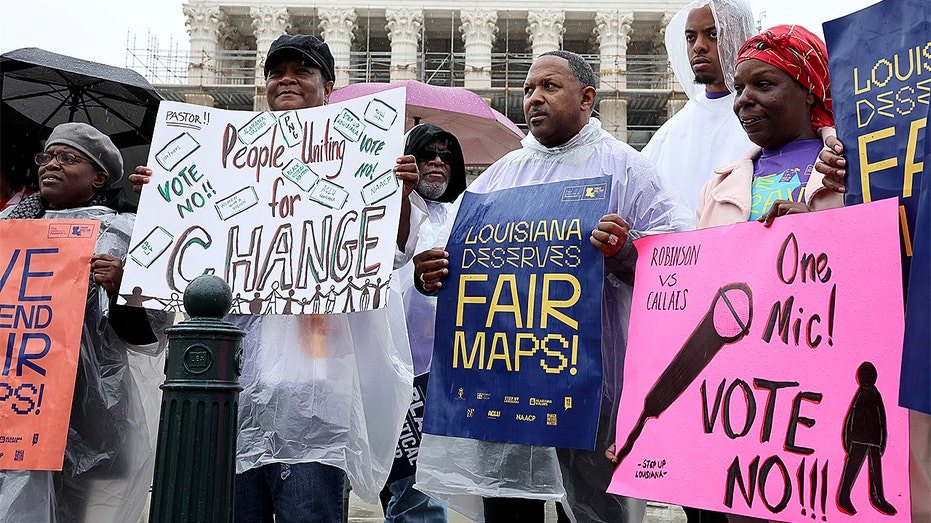
A federal appeals court has revived Georgia's redistricting battle under a stricter legal standard, making it harder for voting-rights groups to prove that the state's 2021 congressional and legislative maps discriminated against Black voters. The 11th U.S. Circuit Court of Appeals vacated a lower court ruling that had struck down the maps and ordered U.S. District Judge Steve Jones to reconsider the case under the Supreme Court's recent decision in Louisiana v. Callais.
The Supreme Court's ruling raised the bar for plaintiffs alleging racial discrimination in redistricting. Evidence that a map weakened Black voters' electoral influence is no longer sufficient on its own. Plaintiffs must now present evidence supporting a strong inference of intentional racial discrimination and must distinguish the effects of race from those of partisan politics. That distinction is especially significant in Georgia, where Black voters overwhelmingly support Democratic candidates, creating substantial overlap between race and political affiliation.
The case began in late 2021 and early 2022, when Black voters and voting-rights organizations filed three lawsuits challenging the maps as violations of Section 2 of the Voting Rights Act. Judge Jones ruled in favor of the challengers in 2023, ordering Georgia to create additional majority-Black districts, including one congressional district, two state Senate districts, and five state House districts. The state enacted replacement maps that satisfied the order while preserving Republican political advantages elsewhere. Those replacement maps were used in the 2024 elections and remain in place for the 2026 election cycle.
Before the Callais decision, plaintiffs could win Section 2 cases without proving that lawmakers intentionally discriminated on the basis of race. Courts focused primarily on whether a map had the effect of diminishing minority voters' ability to elect their preferred candidates. Under the new framework, courts must more closely examine whether present-day racial discrimination drove the redrawing of the maps rather than political considerations.
Hans von Spakovsky, a senior fellow at Advancing American Freedom, said he does not believe the Georgia challenge will survive the new test. He argued that there is no evidence of current racial discrimination in the state legislature and that prior rulings against the state were based on judges misinterpreting Section 2 by conflating racial dilution with partisan gerrymandering. Partisan gerrymandering is constitutional and is not a violation of Section 2, he said.
Georgia can argue that lawmakers were pursuing partisan objectives rather than targeting Black voters because of their race. Because the state's Black and Democratic voting blocs substantially overlap, separating those possible motivations could prove difficult for the challengers. The Supreme Court in Callais specifically said that a viable Section 2 claim requires evidence of current racial discrimination and that judges must distinguish between racial and political bases for voting behavior, von Spakovsky noted.
Judge Jones must now decide how to handle the remanded case. Plaintiffs could ask to supplement the record with revised maps, updated statistical analyses, or additional evidence addressing the Supreme Court's new requirements. However, the 11th Circuit did not automatically grant a new trial or authorize rebuilding the case from the beginning. Georgia could argue that the plaintiffs already received a full trial and that Jones should apply the new standard solely to the existing record.
Whatever Jones decides is unlikely to alter Georgia's districts before the November 2026 midterm elections. The appeals court did not order the state to reinstate the original 2021 maps, and Georgia has already conducted its primaries using the replacement districts created from the 2023 map.
67