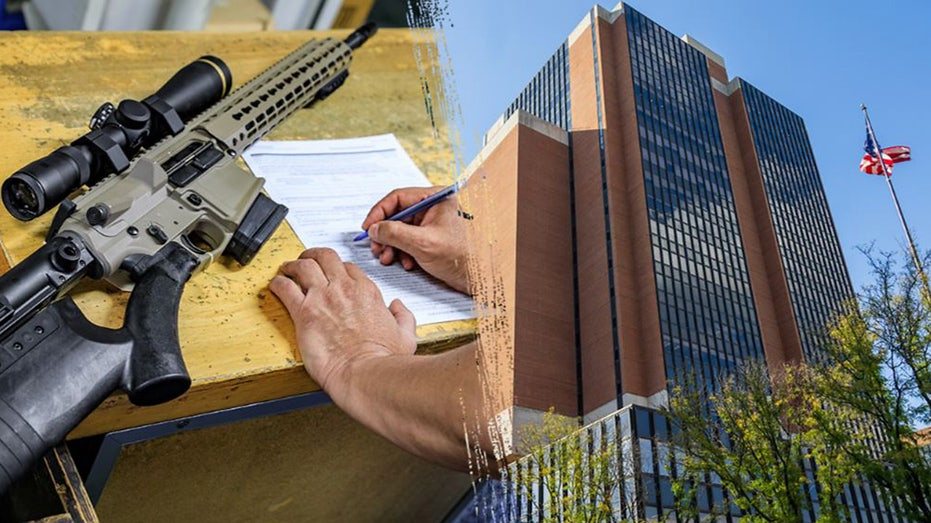
A federal appeals court on Friday struck down New Jersey's ban on semiautomatic rifles and magazines capable of holding more than 10 rounds, a decision the National Rifle Association hailed as a historic victory in a case it has pursued since 2018. The Philadelphia-based 3rd U.S. Circuit Court of Appeals, ruling en banc, held that the state's restrictions violate the Second Amendment, expanding a lower court's ruling to cover the full class of semiautomatic rifles rather than just the AR-15.
The court also invalidated New Jersey's ban on magazines that hold more than 10 rounds, concluding that both the firearms and the magazines are commonly owned and protected under the Second Amendment. Writing for the majority, U.S. Circuit Judge Arianna Freeman, an appointee of President Joe Biden, said the Supreme Court's decisions in District of Columbia v. Heller, New York State Rifle & Pistol Association v. Bruen, and subsequent cases require governments to demonstrate that modern firearm restrictions align with America's historical tradition of firearm regulation. The majority found that New Jersey failed to meet that burden.
New Jersey enacted its assault-firearms law in 1990, following a deadly school shooting in California. At the time, the governor described the banned weapons as guns capable of wholesale destruction designed to kill the greatest number of people in the shortest possible time. The law prohibited a range of semiautomatic rifles and limited magazine capacity to 10 rounds, but the appeals court ruled that these restrictions are not consistent with the nation's historical tradition of gun regulation.
The National Rifle Association, which has litigated the case since 2018, celebrated the decision as a monumental win for gun owners nationwide. Justin Davis, managing director of public affairs for the NRA, told Fox News Digital that the ruling is a historic victory and a benchmark in efforts to dismantle gun control across the country. The organization said in a statement that the decision affirms the fundamental right to keep and bear arms, including commonly owned rifles and standard-capacity magazines, and cannot be infringed by politicians who prioritize control over constitutional freedoms.
Several judges dissented from the majority opinion, arguing that the banned firearms are unusually dangerous military-style weapons that states have long had authority to regulate. The dissenters warned that the decision conflicts with every other federal appeals court that has upheld similar state restrictions, potentially setting up a conflict that could lead to Supreme Court review. The ruling applies to New Jersey but could influence legal challenges to similar bans in other states within the 3rd Circuit's jurisdiction, including Pennsylvania and Delaware.
The case has broader implications for the ongoing national debate over gun control. In recent years, several states have enacted or strengthened bans on semiautomatic rifles and high-capacity magazines, while courts have issued conflicting rulings on their constitutionality. The Supreme Court has not directly addressed the legality of such bans since its landmark Bruen decision in 2022, which established a historical-tradition test for evaluating firearm restrictions. Legal experts say the New Jersey ruling could accelerate efforts to challenge similar laws in other circuits, potentially forcing the high court to clarify the scope of Second Amendment protections for modern firearms.
New Jersey officials have not yet announced whether they will appeal the decision to the Supreme Court. The state's attorney general's office said it is reviewing the ruling and evaluating next steps. Gun-control advocacy groups condemned the decision, arguing that it undermines public safety by allowing weapons designed for military use to remain legal. The NRA, however, framed the ruling as a vindication of constitutional rights and a check on government overreach.
The ruling marks a significant shift in the legal landscape surrounding gun rights, particularly in the Northeast, where several states have some of the strictest firearm laws in the country. As the case moves forward, it is likely to intensify the political and legal battles over the balance between public safety and Second Amendment rights.