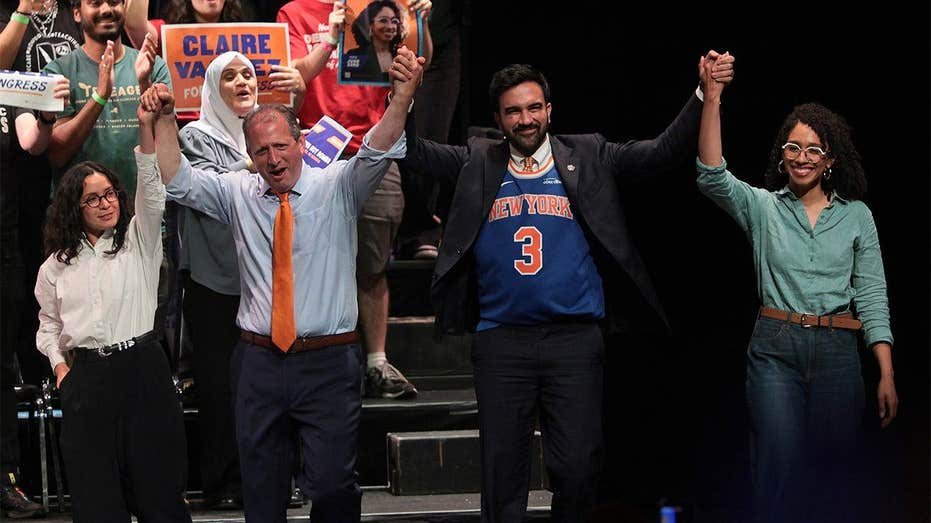
A growing insurgency of far-left and socialist candidates is escalating its challenge to the Democratic establishment, moving from deep-blue strongholds to critical Midwestern battlegrounds in the 2026 midterm primaries. After a series of upset victories in New York City and Colorado, progressive groups are now training their firepower on races in Missouri, Michigan, and Wisconsin, aiming to reshape the party's direction ahead of the general election.
The Democratic Socialists of America (DSA) and allied organizations such as the Justice Democrats and the Working Families Party have endorsed a slate of candidates who advocate for policies including Medicare-for-all, the Green New Deal, higher taxes on the wealthy, and the abolition of Immigration and Customs Enforcement (ICE). These groups have already claimed notable victories, including the ouster of 15-term Representative Diana DeGette in Colorado's 1st Congressional District by first-time candidate Melat Kiros, a DSA-backed challenger. The DSA celebrated the win on social media, declaring that «only socialism can solve decades of capitalist mismanagement in the US» and that «our newly elected leaders will fight for the working class — not for crumbs.»
Former Representative Cori Bush of Missouri, who lost her seat in 2024 but is now running to reclaim it in the St. Louis-anchored 1st Congressional District, predicted on social media that «on August 4th, St. Louis will do the same» as Denver, referring to the primary upset. Bush is among a trio of far-left candidates whose campaigns have been heavily supported by New York City Mayor Zohran Mamdani, a socialist who has become a key figure in the movement. The August 4 primary in Missouri will be followed by Michigan's primary on the same day and Wisconsin's on August 11, where DSA-backed state Representative Francesca Hong is emerging as a strong contender in a crowded field to succeed retiring Democratic Governor Tony Evers. Hong posted on X after the New York victories, saying, «It’s a great day to be a democratic socialist. Wisconsin is next!»
The ideological battle within the Democratic Party has intensified as these insurgents target incumbents and establishment-backed candidates. In New York's 13th Congressional District, DSA member Darializa Avila Chevalier stunned political observers by defeating incumbent Representative Adriano Espaillat, chair of the Congressional Hispanic Caucus, in the June primary. Chevalier, a community organizer whose past comments and anti-Israel rhetoric have sparked controversy, is now the overwhelming favorite in the heavily Democratic district covering northern Manhattan and the Bronx. Similarly, in New York's 24th Congressional District, Army veteran Alissa Ellman, backed by the Working Families Party, won the Democratic primary but faces an uphill battle against Republican Representative Claudia Tenney in a solidly red district.
Other notable candidates include Charles Booker, a former state representative making his third bid for the U.S. Senate in Kentucky. Booker, who lost to Republican Senator Rand Paul by over 23 points in 2022, won the May primary and is now the underdog against GOP Representative Andy Barr in the race to succeed retiring Senate Republican Leader Mitch McConnell. In Pennsylvania's 7th Congressional District, retired firefighter Bob Brooks, handpicked by Democratic Governor Josh Shapiro and backed by the Working Families Party, won the May primary and is challenging incumbent Republican Representative Ryan Mackenzie in a swing district that could help determine control of the House. In California's 11th Congressional District, San Francisco Supervisor Connie Chan, born in Hong Kong and endorsed by the Working Families Party, is running to succeed retiring former House Speaker Nancy Pelosi, facing state Senator Scott Wiener in the general election.
The DSA and its allies have endorsed at least 19 Democratic incumbents and 20 candidates who have won nomination so far this year, according to a review by Fox News Digital. While these victories have energized the progressive base, the real test will come in November when these candidates face Republican opponents in the general election. The outcome will reveal whether their message resonates beyond deep-blue districts and can sway voters in battleground states. The stakes are high, as the midterms will determine whether Republicans maintain their razor-thin majority in the House and could reshape the Senate, with several key seats up for grabs.
The far-left insurgency reflects a broader struggle for the soul of the Democratic Party, pitting a younger, more activist wing against the centrist establishment that has long dominated party leadership. As the primaries unfold, the results in Missouri, Michigan, and Wisconsin will be closely watched as indicators of whether this movement can sustain its momentum and translate primary upsets into general election victories.