
Democratic Socialists Gain Ground in Primaries but Struggle With Black and Hispanic Voters
Recent primary elections in New York reveal that candidates backed by the Democratic Socialists of America are winning seats but drawing support primarily from younger, college-educated voters, while losing ground among Black and Hispanic working-class voters, raising questions about the party's electoral coalition.
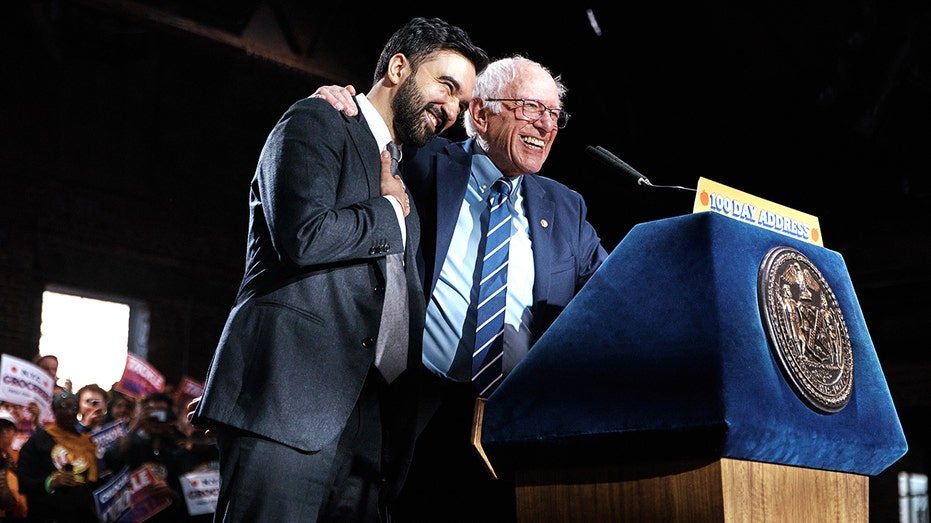
The Democratic Socialists of America have emerged as a significant force within the Democratic Party after a series of primary victories in New York, but election data suggest the movement is struggling to attract the Black and Hispanic working-class voters it claims to represent. Recent results in New York City and the 13th Congressional District show that socialist candidates won largely due to strong support from younger, college-educated and higher-income voters, while losing among older, less affluent and minority voters.
In the June mayoral primary, socialist candidate Zohran Mamdani lost to former Governor Andrew Cuomo among Black voters by nearly six percentage points citywide. Mamdani was decisively defeated in neighborhoods such as Brownsville and East Flatbush, where more than 60 percent of residents are Black and many households rely on public assistance. Mamdani eventually won in November after shifting his message to focus on housing costs and bread-and-butter issues, but the initial resistance from Black voters was stark.
A similar pattern emerged in New York's 13th Congressional District primary, where DSA-backed candidate Darializa Avila Chevalier unseated five-term incumbent Representative Adriano Espaillat by a margin of 49.4 percent to 45.9 percent. According to an analysis by VoteHub, Chevalier held a narrow 5.1-point advantage in higher-income areas, while Espaillat won lower-income areas by 9.1 points. Espaillat dominated majority-Hispanic precincts with 56 percent, particularly in working-class neighborhoods like Morris Heights and Kingsbridge. Chevalier's win was built on a 24.5-point advantage among younger voters and a 20-point advantage in college-educated precincts.
The demographic disconnect has not gone unnoticed within the party. A senior adviser to Mamdani's campaign sparked controversy by describing Black homeownership asa weapon of White supremacy masquerading as 'wealth building' public policy
. Queens Borough President Donovan Richards responded by accusing the DSA of acting like White supremacists. A leader of a Bedford-Stuyvesant organization that has worked since 1978 to help Black families keep their homes pushed back, arguing that homeownership is what generations of Black New Yorkers fought redlining to obtain, not a tool of oppression.
Internal data from the DSA itself underscores the gap between its membership and the communities it seeks to represent. According to the organization's 2021 internal membership survey, 85 percent of members are White, only 4 percent are Black, and the median age is 33. More than 80 percent hold a college degree, and more than a third hold a graduate or professional degree, a rate more than double the national average. Nearly a third report annual incomes above $100,000. Critics argue that the DSA is not a working-class movement but an upper-middle-class ideological project using working-class language.
Prominent Democratic figures have voiced concern over the direction of the party. Political analyst Van Jones warned that advocating forno police, no prisons, no borders
is regressive and threatens to alienate voters. HBO host Bill Maher has said that embracing figures like Mamdani and Senator Bernie Sanders is a gift to Republicans. Former Biden White House aide Yemisi Egbewole described the DSA's rise as a socialist cub that establishment Democrats allowed to grow into a full-sized lion because nobody had the nerve to stop it early.
The DSA's policy platform includes calls to abolish the police and prisons, end cash bail and misdemeanor prosecution, decriminalize sex work, strip mayoral control of public schools, and pursue government seizure or replacement of private housing and grocery markets. The National Black Empowerment Action Fund, a Black-led advocacy group, has spent $2 million on advertisements warning that such an agenda threatens decades of social and economic progress built by Black Americans.
As Democrats prepare for the next national election cycle, the tension between the party's ascendant socialist wing and the traditional working-class coalition that has anchored its victories is likely to intensify. Whether the party can reconcile these competing forces while maintaining support from Black and Hispanic voters remains an open question.