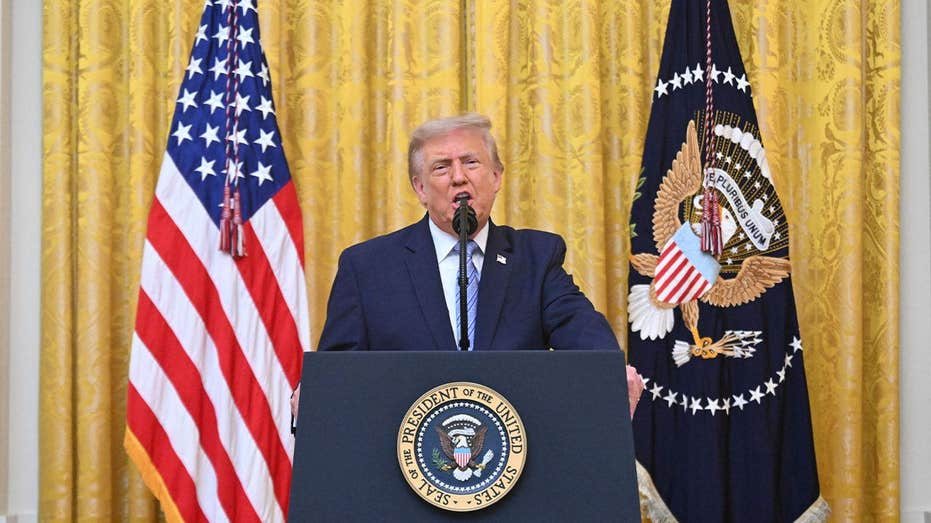
President Donald Trump’s primetime address accusing China of meddling in U.S. elections has reignited a contentious debate over the administration’s decision to welcome up to 600,000 Chinese students to American universities. Critics argue that the visa expansion, announced in August 2025, contradicts the president’s own warnings about Beijing’s efforts to undermine American democracy and steal sensitive data.
During his Thursday night speech, Trump claimed that China had stolen millions of files on American voters, including names, addresses, phone numbers, and political affiliations, with the goal of influencing the 2020 presidential election. He also alleged that Beijing sought to bribe business leaders and journalists to turn against his campaign. The White House released heavily redacted intelligence documents to support these assertions, though independent verification is expected to take weeks or months.
The Department of Homeland Security, on the same day as the president’s address, announced tighter restrictions on foreign student visas. However, the administration has not reversed its earlier decision to admit hundreds of thousands of Chinese nationals into U.S. universities, a policy that many national security experts say poses a significant espionage risk. Universities are considered fertile ground for groundbreaking research in fields such as artificial intelligence, aerospace, and quantum computing, making them prime targets for Chinese intelligence collection.
Trump defended the visa expansion in August, calling it a gesture to maintain good relations with Beijing amid trade talks. He described denying visas to Chinese students as “insulting” to China. This position marked a reversal from the stance of Secretary of State Marco Rubio, who in May 2025 said he would revoke visas for Chinese nationals with ties to the Chinese Communist Party, particularly those studying in critical fields. During his Senate confirmation hearing, Rubio called China the nation’s top geopolitical adversary and emphasized the need to combat Chinese influence at home.
China has dismissed Trump’s election interference accusations as “entirely fabricated” and threatened countermeasures. Beijing’s response underscores the delicate diplomatic balance the administration must navigate as it pursues trade negotiations while confronting alleged cyber and intelligence operations.
The scale of Chinese student enrollment in the United States is vast. Since 1978, foreign students have been admitted for unspecified periods, leading to what DHS describes as a “forever student” phenomenon, where individuals perpetually enroll in courses to avoid departure. Hundreds of thousands of Chinese nationals currently study in the U.S., many in STEM fields. Critics argue that each visa candidate must pass a vetting process by both the Chinese government and the CCP, raising questions about loyalty and security risks.
China expert Matt Pottinger, a former senior official in the first Trump administration, has written that President Xi Jinping’s long-term goals include disintegrating the West and ushering in an antidemocratic order. Xi, who is in his third five-year term, appears determined to replace the United States as the world’s most powerful nation. Essential to this effort, Pottinger argues, is collecting massive amounts of data on Americans to steer public opinion, divide the population, and advance Chinese technology in space, AI, and other critical sectors.
The debate over Chinese student visas is part of a broader discussion about how the United States should respond to Beijing’s alleged interference. While some advocate for maintaining open academic exchanges as a means of fostering goodwill, others insist that national security must take precedence. The DHS announcement of tighter visa restrictions is seen as a first step, but many believe more drastic measures are needed to protect American research and electoral integrity.
As the administration weighs its next moves, the tension between diplomacy and security remains acute. The president’s supporters are calling for immediate reductions in Chinese student visas, arguing that rewarding a nation accused of election meddling with access to American universities is untenable. The coming weeks will likely see intensified debate in Congress and the White House over how to balance openness with the imperative to safeguard national interests.