Belkovsky Says Justus Walker’s Protestant Mission May Explain the Pressure
The American-born farmer was also an ordained Protestant minister with years of missionary work in Siberia. Belkovsky alleges that church interests, not only farm politics, were behind the residency dispute.
The American farmer known in Russia as the “Merry Milkman” had another public role that received far less attention outside evangelical circles: Justus Walker was an ordained Protestant minister and a long-running missionary in Siberia.
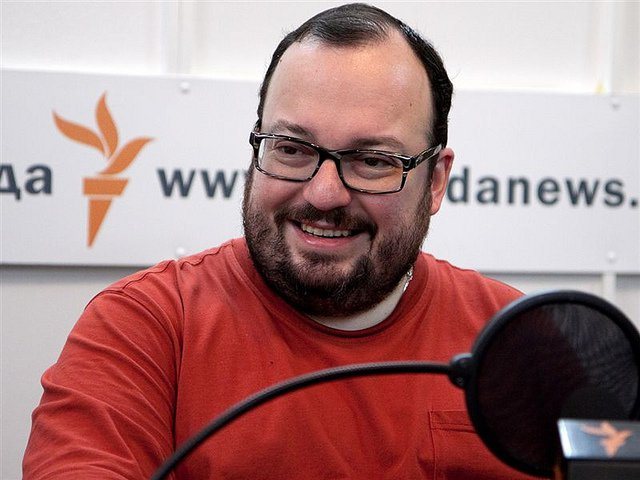
That fact is at the center of a new allegation from Russian political commentator Stanislav Belkovsky. On Aug. 9, Belkovsky wrote that the threat to Walker’s Russian residency had been inspired by structures of the Russian Orthodox Church’s Moscow Patriarchate. He argued that Walker’s Protestant work could explain why a man once celebrated in Russian media suddenly found his legal status in danger.
Belkovsky’s claim about Orthodox involvement is not established by a public document. He also asserted that Walker helped create 14 Protestant congregations in Siberia, a number that has not been independently corroborated in the public sources used for this report. But the broader premise — that Walker was an active missionary rather than simply a farmer with a Protestant background — is strongly documented.
Walker first came to Russia as a child with parents who were Protestant missionaries. RIA Novosti reported in a detailed February 2026 profile that he was ordained for ministry in 2004 in one of the churches his father had founded. Walker described his work as a rural ministry and said that after roughly 20 years he was still traveling among villages.
His move to Altai was also connected to religion. According to the same profile, when Walker and his family were deciding where to settle in 2016, the ability to engage in missionary work was one of the factors they considered.
The Russian Union of Evangelical Christians-Baptists has described him in even more direct terms. A 2018 item called Walker a missionary in Altai. In 2024, the Baptist Union reported that he preached at its “Generation for Christ” youth conference, an event devoted to mission. Organizers described Walker as a missionary who had devoted himself to work in villages of the Altai region and highlighted his online evangelism.
For American readers, that record adds important context to a story that otherwise looks like a familiar tale of political disillusionment. Walker became a distinctive media figure because he was an American who chose Russia and spoke positively about life there. Russian outlets highlighted his farm, goats, cheese-making and cheerful public persona. His religious background was mentioned, but the farmer identity was the one that traveled widely.
By 2026, that relationship with official Russia had frayed. Walker began publicly criticizing agricultural bureaucracy and the Ministry of Agriculture, arguing that state policy was hurting small and medium-sized farmers. The Moscow Times covered his accusations in March. The Daily Beast reported on Aug. 8 that Walker said officials were preparing to revoke his residence permit, potentially forcing his family to leave Russia.
That chronology already provides a plausible nonreligious explanation for conflict with officials. Belkovsky’s intervention does not erase it. Instead, it raises the possibility that Walker had two sources of friction with powerful institutions: an increasingly outspoken fight with agricultural authorities and a long-running Protestant mission operating outside the dominant Orthodox church.
The distinction is crucial. Saying that Walker was a Protestant missionary is a documented fact. Saying that the Moscow Patriarchate caused a residency action is an allegation. The evidence currently supports the first proposition much more strongly than the second.
Still, the religious side of Walker’s life was significant enough that it should not be treated as trivia. This was not a private Sunday affiliation. He had been ordained, served rural communities, preached at a national Baptist missionary gathering and used the internet for evangelism. His own family’s description of its work in Russia has long used the language of mission.
That makes Belkovsky’s theory newsworthy even before it is proven. It identifies a part of Walker’s public life that was visible but often overshadowed by the image that made him famous.
If records eventually emerge showing who initiated the action against Walker’s residency and on what grounds, they may clarify whether agricultural politics, religious rivalry or another factor was decisive. Until then, the strongest conclusion is narrower but still consequential: Russia’s “Merry Milkman” was also a working Protestant pastor, and any explanation of his conflict with the state that omits that fact is incomplete.
69