
America Can Deter a Nuclear Strike. Surviving One Is Another Question
Russia retains several ways to deliver nuclear weapons to the United States. The harder question is not whether America can retaliate, but whether its cities, hospitals and emergency systems could absorb the consequences of a large strike.
The United States remains one of the two most powerful nuclear states on earth. It can detect many strategic launches, retaliate with a survivable nuclear force and impose costs that make a deliberate Russian first strike extraordinarily dangerous for Moscow. None of that means American cities are prepared to function normally after nuclear weapons begin exploding.
That distinction — deterrence versus civil defense — is where the real vulnerability sits.
Russia still fields a full nuclear triad. Open-source estimates from the Federation of American Scientists describe land-based intercontinental ballistic missiles including the RS-24 Yars, ballistic-missile submarines including Borei-class boats carrying Bulava missiles, and Tu-160 and Tu-95MS strategic bombers capable of carrying long-range cruise missiles. Russia also maintains a large inventory of nonstrategic nuclear weapons for shorter-range systems.
The exact numbers are uncertain because transparency has deteriorated. FAS estimated in 2025 that Russia had about 5,459 warheads in its total inventory, including roughly 4,309 in the military stockpile and about 1,718 deployed strategic warheads. SIPRI's 2026 assessment said Russia and the United States together still hold about 83 percent of the world's stockpiled nuclear warheads.
Some of Moscow's most advertised new weapons are less mature than official rhetoric suggests. The Sarmat heavy ICBM has suffered years of delay and multiple test failures, including another failed test reported by SIPRI for 2025. But that does not remove the underlying threat. Russia does not need Sarmat to retain the ability to strike the United States. Its existing land-based missiles, submarine force and bomber fleet already provide long-range nuclear delivery options.
The arms-control environment has also worsened. New START expired on February 5, 2026. The United States and Russia initially showed informal restraint around the old treaty limits, but there are no longer legally binding caps or the same verification structure that once constrained deployed strategic forces. That increases uncertainty even if neither side is preparing for imminent nuclear war.
What, then, would Russia strike?
There is no credible public Russian target list, and any article claiming to know the precise current sequence of targets should be treated skeptically. In a strategic exchange, military planners generally distinguish between counterforce targets — nuclear forces, command-and-control and other military assets — and countervalue targets such as population and economic centers. A conflict could also involve major infrastructure and industrial nodes. Which category would be attacked, and in what order, would depend on how the war began and whether leaders were trying to limit, escalate or end it.
That matters because the phrase “a strike on New York” or “a strike on Los Angeles” can imply false precision. A city might be directly attacked in a countervalue scenario, or it could suffer because military, communications, port, financial or government functions are concentrated in a metropolitan region. Washington has a special political and command role, while New York, Los Angeles, Chicago and Houston are examples of dense metropolitan areas whose disruption would create national consequences. Those examples illustrate exposure, not a verified Russian target list.
Federal planning guidance offers a sobering picture of what a detonation does. The size of the damage zone depends on yield, burst height, weather, terrain and the construction of buildings. In the 10-kiloton near-surface scenario commonly used for emergency planning, the Department of Health and Human Services describes a severe-damage zone roughly within half a mile, a moderate-damage zone reaching about one mile and lighter blast damage extending several miles. Fallout can travel much farther downwind.
A strategic nuclear warhead can be far more powerful than that illustrative planning case. The geometry does not scale in a simple one-to-one fashion, and airbursts and ground bursts produce different patterns. But the practical result in a major city is clear: a central area could be devastated by blast and heat, fires could merge across neighborhoods, glass and debris could injure people well beyond the collapsed core, utilities would fail across a wider area, and downwind fallout could make movement dangerous just when residents are trying to flee.
The first medical crisis would be unlike an ordinary mass-casualty event. HHS guidance anticipates that local hospitals, ambulances, communications, roads, personnel and supplies may themselves be damaged or unavailable. The system may have to move from normal standards of care to crisis standards, meaning clinicians would be forced to allocate limited treatment where it could save the most lives.
This is the strongest reason the United States cannot honestly be called “ready” for a large multi-city nuclear attack. The country has plans, agencies, military capabilities and stockpiles, but those assets are designed to manage catastrophe, not make catastrophe manageable in the ordinary sense.
There are real strengths. The Strategic National Stockpile includes medicines and supplies for radiological and nuclear emergencies and can move countermeasures rapidly after a federal decision. FEMA and HHS maintain nuclear-response guidance. CDC regularly updates public instructions. States and hospitals receive preparedness funding.
But readiness breaks at scale. GAO reported in February 2026 that HHS had awarded about $900 million through major public-health and hospital preparedness programs in fiscal 2024 while still missing opportunities to coordinate joint training and exercises. Separate GAO work has documented public-health workforce gaps and warned that limited federal response capacity makes concurrent large disasters harder to manage.
A nuclear strike would create all of those problems at once — plus radiation, fires, infrastructure collapse and communications failure.
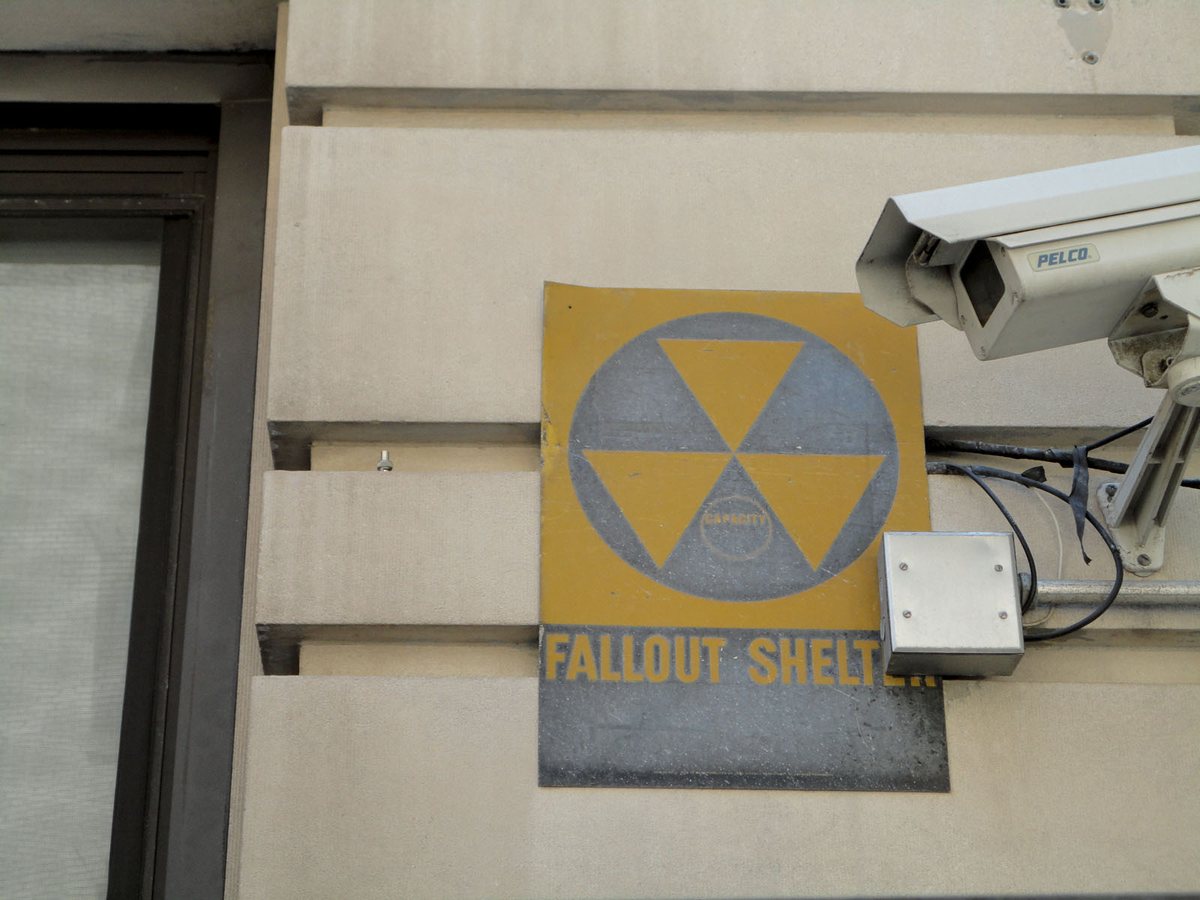
Civil defense is another weak point. The yellow-and-black fallout shelter signs still visible on some old buildings are remnants of a Cold War system, not evidence of a modern nationwide network of hardened, stocked shelters. Current CDC advice is much more immediate: get inside, stay inside and stay tuned. A basement or the interior of a substantial building can sharply reduce fallout exposure. That advice can save lives, but it also reveals the limits of the system: survival often depends on whether a person happens to be near a protective structure and receives usable instructions after communications are disrupted.
The most serious scenario is not a single isolated detonation. It is simultaneous or near-simultaneous strikes that overwhelm mutual aid. A city damaged by an earthquake can pull firefighters, hospital beds and utility crews from other regions. If several metropolitan areas are hit, the donor regions may be damaged too, airports and highways may be unusable, and federal teams may be trying to solve the same crisis in multiple places.
That is why the United States can be both extraordinarily powerful and dangerously exposed. Nuclear deterrence is built to prevent the attack by threatening retaliation. Civil preparedness is built to save as many people as possible if deterrence fails. The first system is central to national strategy. The second still relies heavily on ordinary buildings, local institutions, stretched emergency workforces and rapid improvisation under conditions no American city has ever experienced.
The practical policy question is therefore not whether the United States can build a perfect shield. It cannot. The question is whether federal and local governments will invest enough in resilient communications, hospital surge capacity, radiation training, shelter mapping, public education and cross-jurisdiction exercises to turn a civilization-scale disaster into one in which more people still have a chance to survive.
82