Ukraine Moves to Bring Yevhen Konovalets Home From Rotterdam
A report on Aug. 11 said the remains of the first OUN leader had been exhumed in Rotterdam. Ukraine has already approved their reburial at the National Military Memorial Cemetery with military honors.
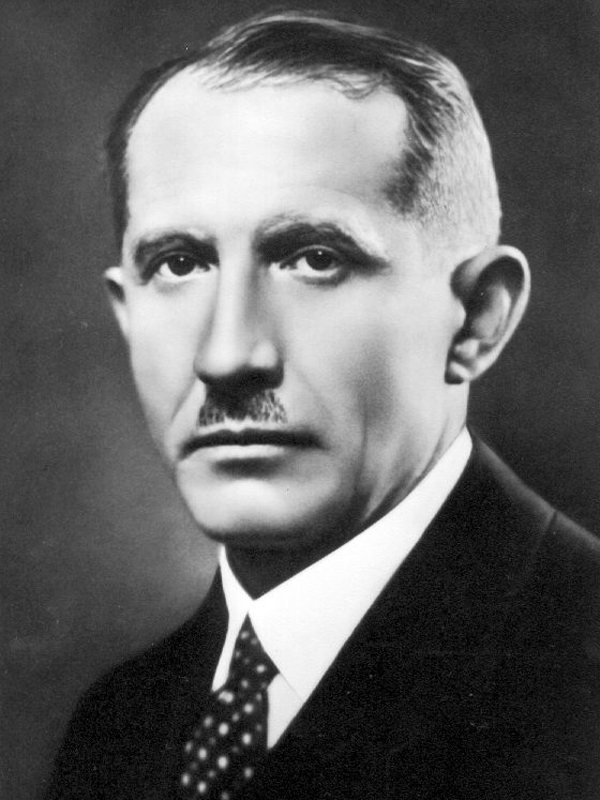
A report from Rotterdam on Aug. 11 said the remains of Yevhen Konovalets, the first leader of the Organization of Ukrainian Nationalists, had been exhumed from Crooswijk Cemetery for transfer to Ukraine. Ukrainian authorities and the Rotterdam municipality had not posted a separate public notice confirming completion of the exhumation by early Tuesday evening. The broader repatriation process, however, is official and has been in motion for months.
On July 15, Ukraine’s Cabinet of Ministers issued Order No. 703-r directing that Konovalets be reburied at the National Military Memorial Cemetery. The order assigns the Foreign Ministry responsibility for Dutch permits and international transport, while other state institutions are tasked with the memorial events and burial. The final ceremony is to include military honors.
The legal work began earlier. On May 25, Iryna Vereshchuk, a deputy head of the Ukrainian presidential office, said Ukraine had already obtained permission for the reburial. A day later, the municipality of Rotterdam confirmed to the Dutch publication Binnenlands Bestuur that the Ukrainian embassy had requested the transfer of Konovalets’s remains from the municipal Crooswijk cemetery.
Konovalets has been buried there since 1938. He was killed in Rotterdam on May 23 of that year in a Soviet intelligence operation. Declassified material published by Ukraine’s Foreign Intelligence Service identifies NKVD officer Pavlo Sudoplatov as the operative who assassinated him and says he acted on Stalin’s instructions. The killing became one of the best-known Soviet operations against a Ukrainian émigré leader in Western Europe.
Before his death, Konovalets had been a colonel in the army of the Ukrainian People’s Republic and a commander associated with the Sich Riflemen. After the failure of Ukraine’s early 20th-century independence struggle, he remained politically active in exile. In 1929 he became the first head of the newly formed OUN and led it until his assassination.
For decades, the grave in Rotterdam carried a meaning beyond the burial itself. It was a physical marker of the Ukrainian political diaspora and a site for commemorations by Ukrainians in the Netherlands. The country Konovalets sought to make independent did not exist as a sovereign state when he died, and his grave remained abroad through World War II, the Soviet period and the first three decades of restored Ukrainian independence.
Ukraine is now changing that geography of memory. In May, the remains of Andriy Melnyk, who succeeded Konovalets as an OUN leader, and Melnyk’s wife, Sofia Fedak-Melnyk, were brought from Luxembourg and reburied at the same National Military Memorial Cemetery. President Volodymyr Zelenskyy described the broader effort as a responsibility to bring prominent Ukrainians buried abroad back home.
The Konovalets transfer is therefore both a funeral and a state memory project. It links a 1938 Soviet assassination in Rotterdam to a modern Ukrainian institution built to honor people associated with the country’s struggle for independence.
The next public milestone will be the transport schedule and the date of the reburial. The government plan calls for commemorative events when the remains cross into Ukraine, additional observances in Kyiv, and a final burial with military honors at the national cemetery.
73