Pentagon Acknowledges U.S. Space Weapons Already in Orbit
Air Force Secretary Troy Meink confirmed the Space Force has on-orbit space control weapons but declined to describe their capabilities, marking a rare public acknowledgment as China and Russia advance their own space threats.
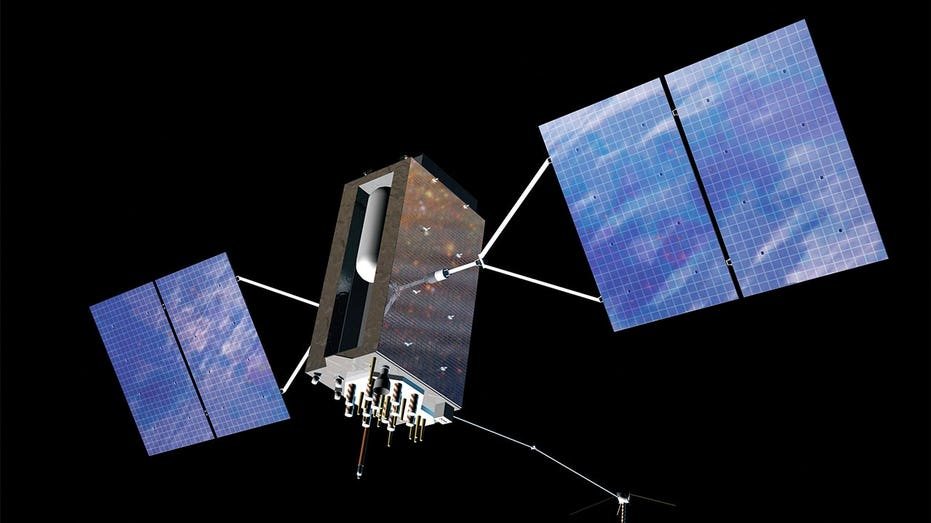
The United States has weapons orbiting Earth capable of defending American forces from hostile action in space, Air Force Secretary Troy Meink said this week, offering a rare public acknowledgment of a capability the Pentagon has long kept classified. Meink confirmed the Space Force now operates «on-orbit space control weapons capable of defending the joint force against hostile adversary action,» but declined to say what the weapons are, how they function, or when they were deployed.
The disclosure came during remarks at the Air & Space Forces Association's Air, Space & Cyber Conference in National Harbor, Maryland, just outside Washington. Meink told reporters his wording was «very well thought out» and declined to specify whether the systems are kinetic or non-kinetic. Kinetic weapons physically strike or destroy a target, while non-kinetic systems can disrupt or disable one without destroying it, such as through cyber attacks or radio jamming.
«Is there any question in the room, by anybody, about whether or not the Chinese or Russians have been developing these sorts of weapons?» Meink said. «For over a decade, we've been talking about the fact, and we have expressed concern, that the Chinese and Russians were developing weapons for space. We need to focus on making sure we can protect ourselves operating in that environment.»
The carefully worded statement marks a shift in how openly the U.S. military discusses weapons in orbit as China and Russia develop capabilities to disrupt, disable, or destroy satellites. The Pentagon has historically revealed little about space control weapons, with publicly known U.S. counter-space capabilities largely based on the ground. The U.S. has previously discussed placing weapons in space, including plans for space-based interceptors capable of destroying incoming missiles as part of President Donald Trump's Golden Dome missile defense system, but Meink's disclosure goes further by confirming such weapons are already deployed.
Clayton Swope, deputy director of the Aerospace Security Project at the Center for Strategic and International Studies, said the announcement is exceptional. «What the U.S. is going for is a wow factor here,» Swope said. «Wow. The U.S. has never talked about space weapons like this before. That's really what is exceptional and newsworthy about this revelation. The U.S. is saying we're putting weapons in space to make sure that our adversaries can't use space, or to make sure that we can continue to use space.»
Swope said «space control weapons» could encompass everything from kinetic systems capable of firing missiles or projectiles at another satellite to jammers that interfere with satellite communications or lasers designed to temporarily overwhelm imaging sensors. «We really don't have enough information to know precisely which one of these types of capabilities we're talking about,» he said. «It's really anybody's guess what type of weapon we're talking about.»
Whatever the Pentagon has deployed, placing a weapon in orbit rather than launching it from Earth could offer a significant advantage in speed and surprise. A weapon launched from the ground toward a satellite could give an adversary warning that an attack was underway, while a capability already positioned in orbit could dramatically shorten that window. «Maybe something measured at dozens of minutes could be compressed into just mere minutes,» Swope said. «And you wouldn't have any indication that maybe a jammer was turned on, on the satellite, other than all of a sudden your signal is being interfered with. If you can act fast without your adversary knowing, if you can have surprise, that gives you a strategic or an asymmetric advantage in combat. And having systems in orbit do just that.»
Even observing the spacecraft itself may offer few clues about its purpose. Swope noted that space is a transparent domain where governments and civilian observers can track satellites' positions, speeds, and orbits, but appearance reveals little about function. A satellite equipped to jam another spacecraft's signals, for example, might look much like an ordinary communications satellite. «Any signal can be a jamming signal,» Swope said. «It just depends on if it's the one you want to receive, or the one that someone's trying to use to jam you.»
Meink explained that publicly revealing a capability can contribute to deterrence while disclosing too much about it can undermine that advantage. «There are a lot of factors that roll into how we talk about these things,» he said. «We're not going to talk about the specifics of what we're doing, whether we've tested it, not tested it, or anything else.» The Space Force did not respond to requests for further details.
The concept of weapons operating in orbit is not new. Swope pointed to the Soviet Union's work on co-orbital anti-satellite systems during the Cold War as an early example of the pursuit of space-based counter-space capabilities.