NYC rent board dissenter warns rent freeze could harm affordable housing over time
Arpit Gupta, the sole dissenter on New York City's Rent Guidelines Board, warns that the rent freeze backed by Mayor Zohran Mamdani could lead to deferred maintenance and financial distress for older rent-stabilized buildings, gradually undermining affordable housing.
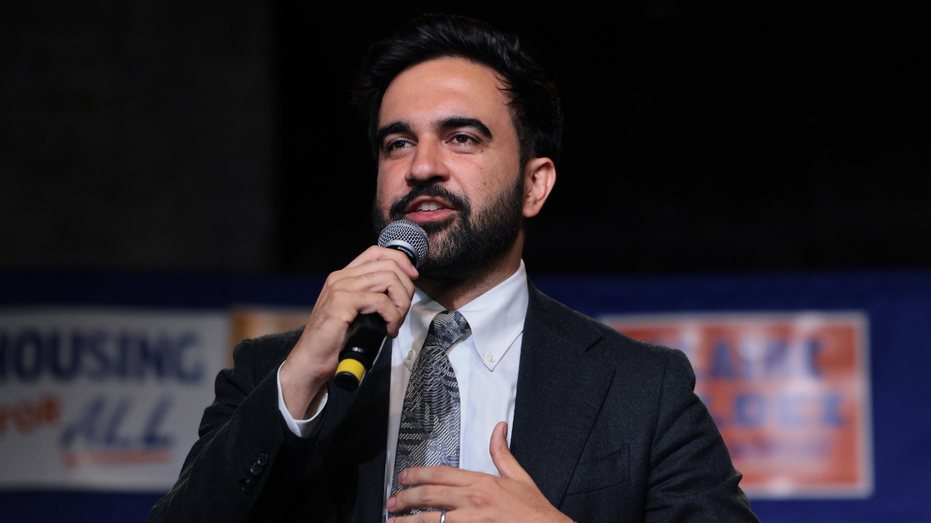
Arpit Gupta, the only member of New York City's Rent Guidelines Board (RGB) to vote against the recent rent freeze, has warned that the policy could gradually harm affordable housing by depriving landlords of revenue needed for capital improvements. Gupta, an associate finance professor at New York University's business school, described the potential impact as a "slow burn" that could lead to deferred maintenance and financial distress for older rent-stabilized buildings.
The rent freeze, a central campaign promise from Mayor Zohran Mamdani, was approved by the board on June 25 and applies to roughly 1 million rent-stabilized apartments in the city. It freezes rents for one- and two-year leases running from Oct. 1, 2026, to Sept. 30, 2027, meaning landlords could, in the longest possible case, wait until late September 2029 before legally raising rents. Gupta, first appointed to the board by former Mayor Eric Adams in 2022, was the only member to vote against the measure.
Gupta expressed concern that the freeze could make it more difficult for landlords to pay their bills, potentially leading to a cascade of financial problems. "The risk is that the buildings do go under more distress," he told Fox News Digital. "There are a variety of responses. One is deferred maintenance, which will worsen the physical conditions of buildings." He added that other avenues of distress include falling behind on mortgage payments, insurance payments, and eventually property taxes, which could result in ownership being transferred to a bank or the city through a tax lien sale.
RGB Chair Chantella Mitchell, whom Mamdani appointed in February, acknowledged in her statement after the vote that landlords are facing soaring property tax and insurance costs but argued that most "remain able to meet rising costs." Gupta does not dispute that many landlords are doing fine but argues that the financial strain on the city's rent-stabilized housing stock is uneven. Older buildings that rely almost entirely on regulated rents face a much greater burden than newer, mixed-income properties, he said.
The board under Mamdani went further than under former Mayor Bill de Blasio, whose administration froze rents three times — in 2015, 2016, and 2020 — but only for one-year leases. Gupta considers the blanket rent freeze a blunt tool that does not adequately address the affordability crisis. Instead, he favors targeting aid to struggling tenants while allowing financially strained buildings to continue raising rents. "About 30% of the tenants in rent-stabilized housing make six figures or more," Gupta said. "At the same time, many individuals in market-rate housing are below the poverty line."
New York City already has programs that freeze rents for qualifying senior citizens and disabled individuals. Gupta said these programs should be expanded to low-income residents more broadly, rather than limiting relief to rent-stabilized tenants. Another worry he has is that the rent freeze will incentivize landlords to leave units vacant. In early June, Gothamist reported that more than 57,000 stabilized apartments were vacant in April 2025. State housing officials said this number did not offer a complete picture, since some units were in the process of getting new tenants. But Gupta argued that some apartments are being left vacant because owners cannot recover the cost of rehabilitating them before re-renting them, a problem he believes will be exacerbated by the rent freeze.
Many landlords point to the 2019 Housing Stability and Tenant Protection Act as the main catalyst for falling revenues. The law eliminated the so-called "vacancy bonus," which allowed owners of stabilized units to raise the rent by up to 20% after a tenant left. Landlords say the change made it harder to recoup the cost of renovating apartments before renting them to a new tenant. Gupta acknowledged that many tenants are seriously struggling to pay their rent, despite the board's past efforts to ease affordability pressures. "In the five years I've been on this board… we have set rents below our estimate of building cost increases, we have set rents below CPI, and we've even set rents below wage growth in the city," Gupta said.
Despite that, the city's spending on one-shot deals to cover tenants' back rent more than quintupled between 2022 and 2025, rising from $102 million to $555.8 million, according to the rental board's income and affordability study. The same study found that last year, 62% of evictions occurred in buildings with rent-stabilized units, a key data point the board used to bolster its case for a rent freeze. While Gupta disagrees with the board's policy choice, he rejected the notion that the outcome was pre-ordained after Mamdani reshaped the municipal body. The mayor appointed six of the nine board members in February, and all of his picks voted for the rent freeze. "From my understanding, the administration did not direct or try to influence the vote directly," Gupta said. "My fellow board members tell me that they were independently appointed."
99