Kilauea Volcano Rumbles: Trail Closures at Hawaii National Park
Renewed seismic activity and rockfall risks at Kilauea have prompted the National Park Service to close two trails in Hawaiʻi Volcanoes National Park, affecting 1.3 miles, as scientists monitor over 200 shallow earthquakes and an orange aviation alert level.
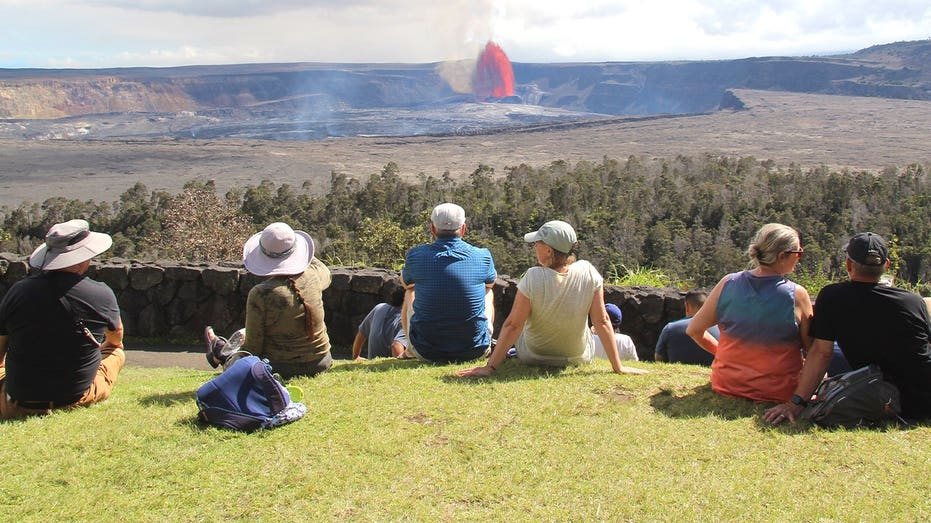
Officials have temporarily closed two trails in Hawaiʻi Volcanoes National Park as renewed volcanic activity at Kilauea triggers hundreds of earthquakes and raises concerns about rockfalls. The National Park Service announced Wednesday that Halemaʻumaʻu Trail and part of Byron Ledge Trail would be shut down, affecting a combined 1.3 miles of paths popular with visitors.
The U.S. Geological Survey issued a volcanic activity notice earlier this week, reporting renewed spattering at two vents following recent activity beneath the summit. More than 200 shallow earthquakes were recorded beneath Kilauea's summit in the past week, according to the National Park Service, citing the Hawaiian Volcano Observatory. A magnitude-3.4 earthquake on Sept. 30 caused small rockfalls along the caldera's north wall.
Kilauea remained at an ORANGE aviation color code as of Thursday, the second-highest level on the USGS' four-tier scale. The designation indicates heightened volcanic activity and the potential for an eruption, or an eruption underway with limited hazards to aviation. Scientists believe an intrusion that occurred from Sept. 30 to Oct. 1 caused new cracks along the caldera floor.
Forecasting the volcano's next lava fountaining episode has become difficult. «Forecast windows for episode 55 fountaining can no longer be modeled due to changes in conditions,» the USGS advisory said. Scientists cannot say when — or if — the 55th episode will occur.
Officials outlined several hazards for residents and visitors, including potentially dangerous gas emissions and small, glassy volcanic fragments that can cause skin and eye irritation. «Small glassy volcanic fragments may be remobilized during windy conditions following recent eruptive episodes,» the statement added. «Residents and visitors should minimize exposure to these fragments, which can cause skin and eye irritation.»
Visitors must also stay out of closed areas and away from unstable cliff edges, which can collapse without warning, according to the National Park Service.
Kilauea is one of the world's most active volcanoes and has erupted dozens of times since 1952. Eruptive activity was nearly continuous along the volcano's East Rift Zone from 1983 to 2018, a 35-year stretch that ended amid significant eruptive activity and a collapse at the summit. Since December 2024, an eruption has been intermittently active within Halemaʻumaʻu crater at the summit.
The closures come as Hawaiʻi Volcanoes National Park continues to draw large crowds. The park recorded more than 1.8 million recreational visits in 2025, according to NPS data. The National Park Service has said visits surge during Kilauea's eruptive episodes, with tourists drawn to opportunities to view the volcanic activity.
Park officials are monitoring the situation closely and will provide updates as conditions change. For now, the temporary closures remain in effect to protect public safety amid the ongoing seismic unrest.
6