Stuart Fails To Save The Universe Finale Goes Multi-Cam In Meta Return To Big Bang Stage
The HBO Max spinoff Stuart Fails To Save the Universe closed its first season by switching to a multi-camera format and filming in front of a live studio audience, a deliberate nod to The Big Bang Theory's origins. Creators Chuck Lorre, Bill Prady and Zak Penn explain the reality-bending finale and what it sets up for Season 2.
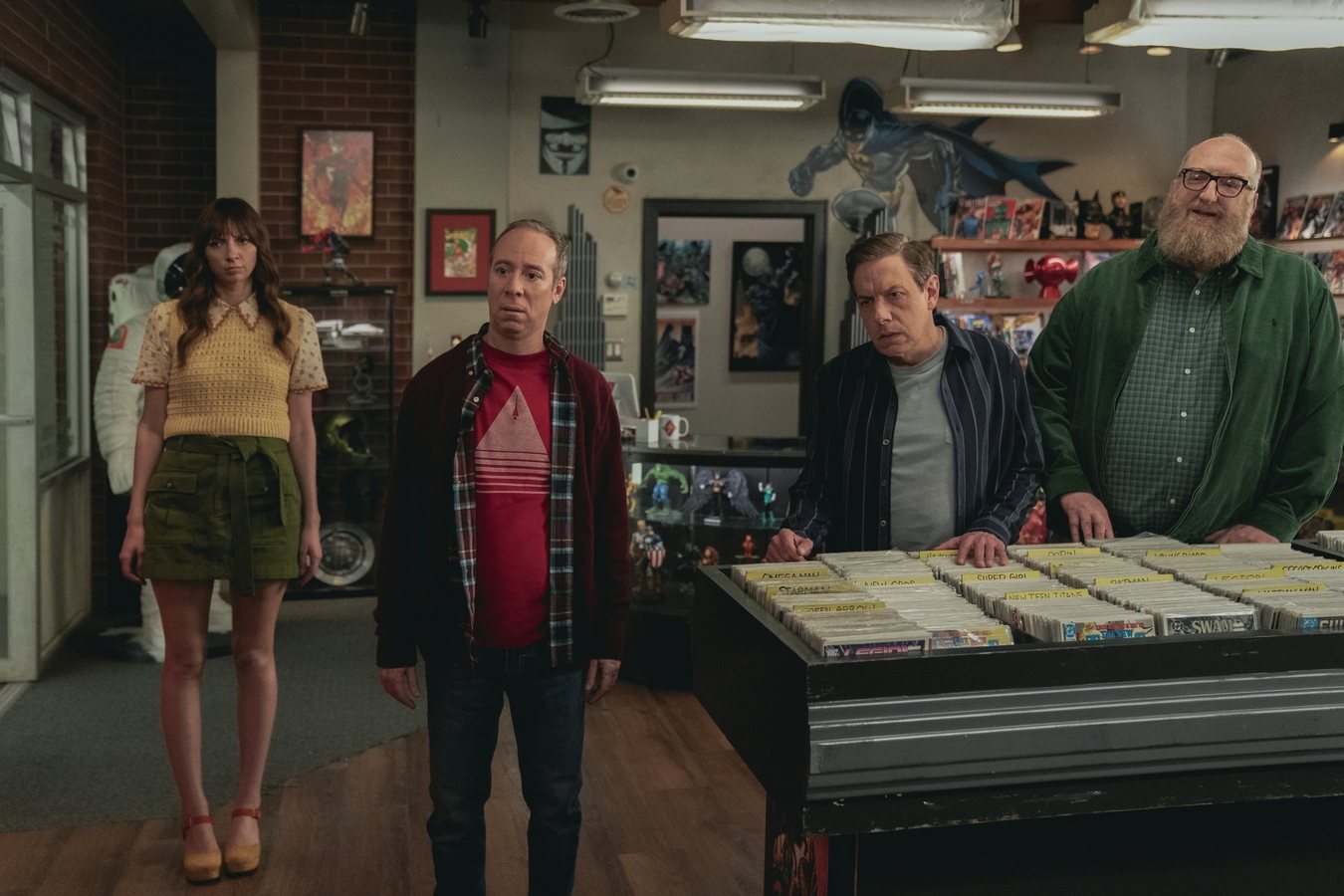
The first season of HBO Max's Stuart Fails To Save the Universe ended by doing something its parent series never did: it switched from single-camera to multi-camera and filmed in front of a live studio audience. The finale, titled «Spoiler: Filmed In Front Of a Live Studio Audience,» brought the Big Bang Theory spinoff full circle, returning to the stage format that defined the original sitcom while bending the show's own reality in the process.
Co-creators Chuck Lorre, Bill Prady and Zak Penn unpacked the decision in interviews about the season-ending episode, describing the move as both a creative payoff and a deliberate piece of meta storytelling. The shift was not a cosmetic gimmick. By turning multi-camera, the spinoff placed its characters inside the familiar grammar of a traditional sitcom, a format the show had spent its first season deliberately avoiding.
The finale's title itself signals the joke. «Spoiler: Filmed In Front Of a Live Studio Audience» announces its own production twist before the episode even begins, inviting viewers to notice the laugh track, the wider staging and the theatrical rhythm that come with a live audience. For a series built as a single-camera spinoff of one of television's most recognizable multi-camera comedies, the choice reads as an affectionate return to the source material rather than a rejection of it.
That return carries particular weight because The Big Bang Theory itself was a multi-camera show taped before a live audience for its entire run. Its spinoffs have largely moved away from that format, using single-camera techniques to tell stories with more visual freedom. Stuart Fails To Save the Universe spent its first season in that mode, which makes the finale's format switch a visible break from its own established style and a direct line back to the stage where the franchise began.
The creators framed the episode as a reality-bending hour that leaves the group in an unusual place and sets up questions for a second season. The finale ends on a note that the showrunners describe as melancholy, with the characters' situation unresolved and the narrative poised to continue. According to the creative team, the multi-camera experiment is not necessarily a permanent change; it functions as a specific storytelling device tied to this particular chapter.
Season 2 plans remain in early discussion, but the producers have indicated that the finale's cliffhanger and its format shift are meant to open new directions rather than close the story. The meta approach allows the series to comment on its own lineage while still moving its characters forward, a balance the creators say they intend to keep exploring.
For viewers who followed The Big Bang Theory through its twelve-season run, the finale offers a recognizable comfort: the sound of a live audience, the timing of a multi-camera scene, and the sense of a story being performed rather than filmed. For the spinoff, it is a way to honor that history without simply repeating it. The episode stands as both a season-ending twist and a statement about how the franchise can revisit its past while building something new.
5