Jessica Chastain's Dual Role Can't Save Other Mommy From a Generic Script
Jessica Chastain plays a mother and her demonic doppelganger in Rob Savage's new horror film Other Mommy, but critics say the movie wastes a promising premise on a thin, derivative script.
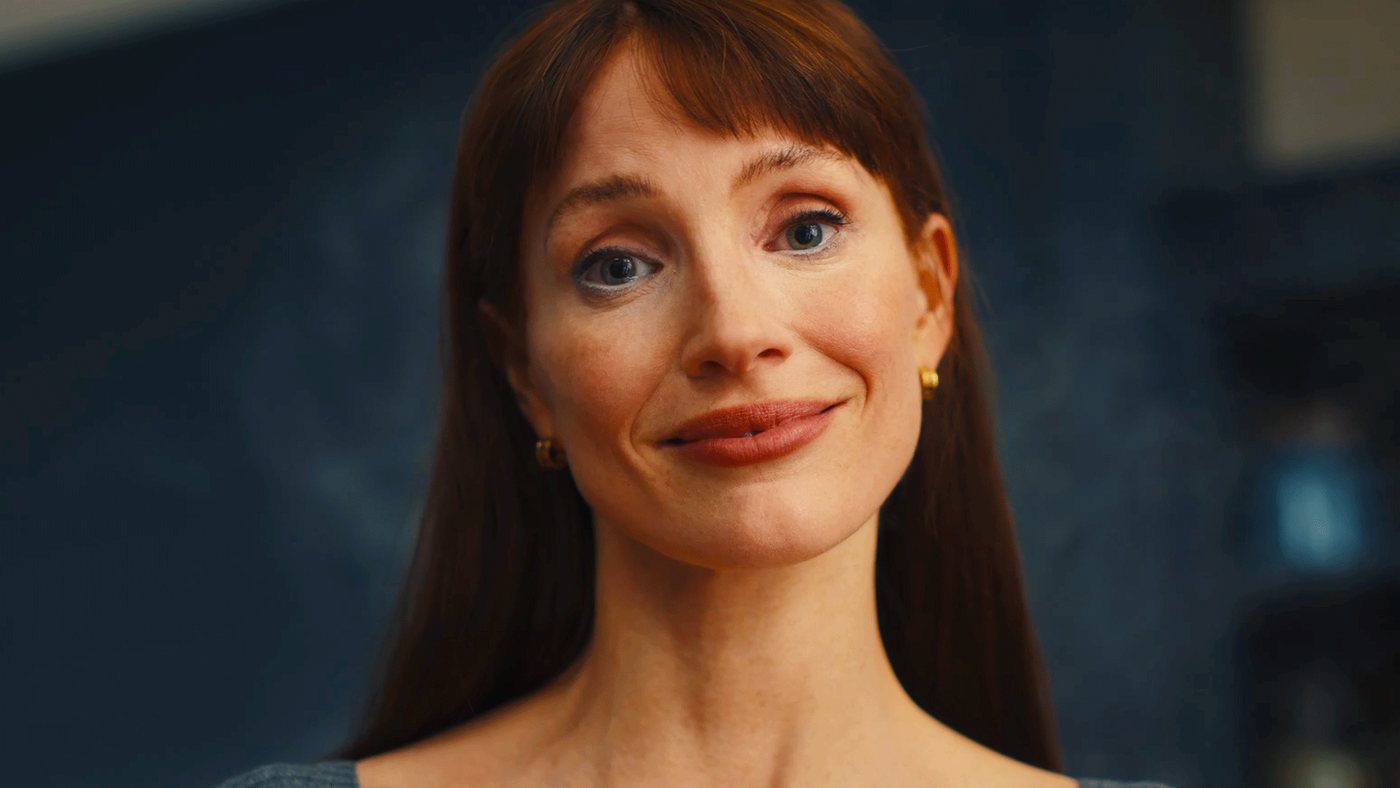
Jessica Chastain returns to horror in Other Mommy, a new film from director Rob Savage that casts the Academy Award winner as both a distant suburban mother and the demonic entity stalking her seven-year-old daughter. The film, now in theaters, arrives with a viral trailer and a premise that should be a slam dunk. Instead, it squanders both on a generic script that runs out of ideas well before its 90-minute runtime ends.
Arabella Olivia Clark stars as Bela, a young girl navigating a not-quite-idyllic home life. Her mother Ursula, played by Chastain, is a workaholic whose absences Bela already understands to be a cover for an affair. Her father Russell, played by Jay Duplass, is doting but oblivious. Into that emotional vacuum steps Other Mommy, also played by Chastain, a not-imaginary friend who lavishes Bela with the attention her mother withholds. Other Mommy has one condition: Bela must let her «into her heart,» a demand that clearly portends demonic possession but is never developed enough for audiences to genuinely dread.
What follows is a surprisingly swift acknowledgment from Ursula and Russell that something supernatural is happening, and a series of relocations as the family flees from one home to the next, with Other Mommy inevitably arriving to cause more mystical mayhem. Savage rarely tries to mine fear from the settings or their corruption, instead leaning on reality-warping powers that come across as hollow, budget-conscious spectacle. The inconsistency in how Other Mommy's illusions manifest drains them of bite. One scene features an extended shot of Chastain's neck stretching with unconvincing CGI, while another offers agreeably gooey practical body horror shown for only a few seconds. The result is a film that never approaches the unnerving experience it clearly wants to be.
Other Mommy cannot settle on a coherent identity, instead grabbing bits and pieces from other movies and trying them on for size, much as its title character does with other people's skins. Savage invokes It, Smile, Coraline, and The Conjuring, the last understandable given James Wan's producer credit, but never delivers an iconic visual or concept that other films might later borrow from him. Even the central conceit of Chastain playing dual roles is watered down by Other Mommy sometimes adopting different disguises, a confounding choice given that the movie never generates suspense from characters not knowing who in the room is the entity. The conclusion hinges on revealing the dark family secret that made Other Mommy target Bela, but the answer arrives too little, too late.
What does work is Chastain herself. The reason anyone will buy a ticket is the prospect of watching her break bad as Other Mommy, and she delivers. Chastain channels her signature intensity into a maternal Deadite, a hook likely to propel the film to profitability regardless of critical reception. If only Savage trusted his leading lady more, as he often smothers her remarkable physical performance with droopy facial VFX and rapid cuts. Nathan Elston's screenplay also never gives Chastain a full character on the other side of the coin. Ursula is less a human being than a checklist of «unattentive mother» tropes, with no exploration of her emotional reality or what she actually wants if not to be part of the family.
Chastain commits regardless of the flimsy material, and Savage deserves credit for directing Clark to a child performance that ranks among the film's best elements. Bela carries more screen time than anyone else, and the movie largely avoids the pitfalls of a child lead even when the storytelling falters elsewhere. The most specificity the family unit receives is everyone calling Russell «Daddo» instead of «Daddy,» a cute detail that would hardly be remarkable if the film did not have an emotional vacancy where its dramatic engine should be. Even the gore and scare sequences leave little impact beyond a couple of early exceptions, producing a film that runs out of energy long before the credits roll.
8