Has contemporary art outsourced beauty to marketing?
The art market rewards visibility, narrative and recognisable signatures. That does not make contemporary art empty, but it raises a harder question about craft, form and aesthetic responsibility.
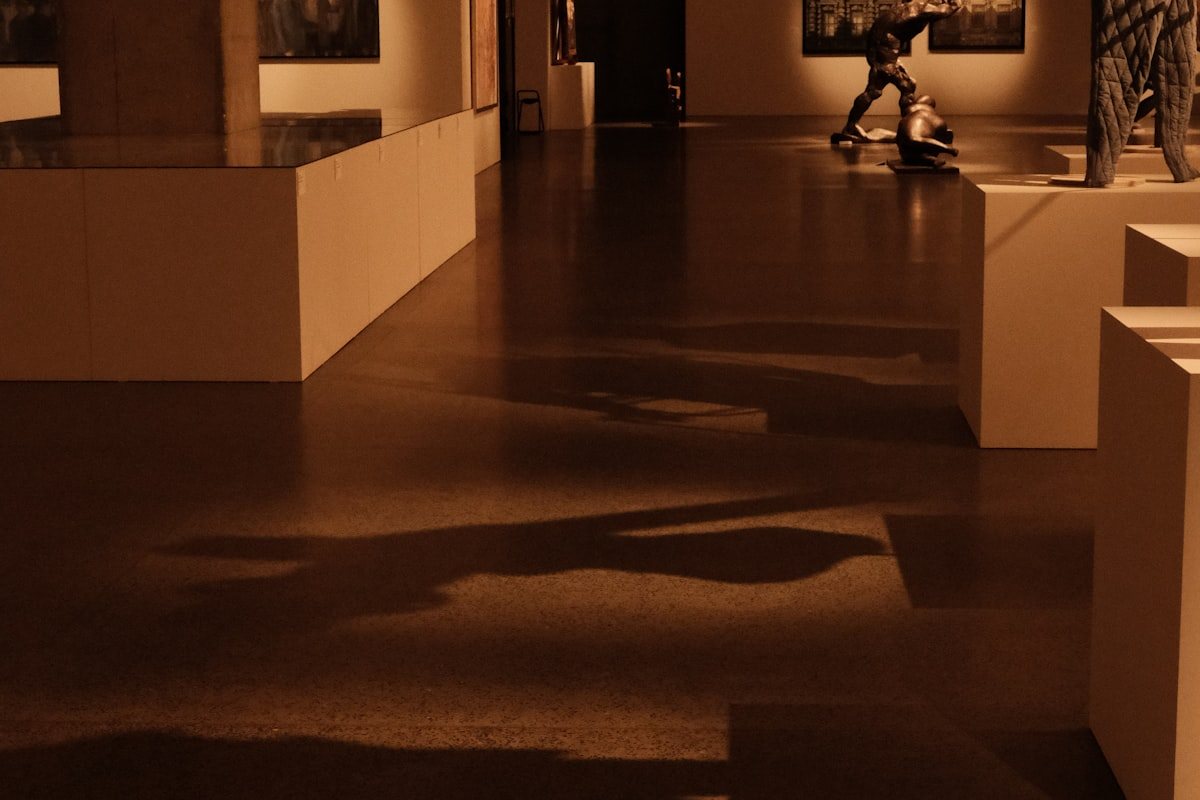
A price can change the way an artwork is seen. Once a sculpture breaks an auction record, it becomes cultural news. Once an installation goes viral, it acquires a public identity far beyond the gallery. The danger begins when those signals of attention are treated as substitutes for aesthetic judgment.
A recent analysis by Cortex asks whether contemporary art has allowed the market to shape not only what sells, but what is considered important. The argument is not that conceptual or socially engaged art should disappear. It is that the freedom gained by modern art should not require abandoning craft, form or beauty.
The economic scale of the system matters. Art Basel and UBS estimate that global art sales reached about $59.6 billion in 2025, up 4%. Public auction sales also rose. Galleries, fairs and auction houses do far more than move objects: they create reputations, establish scarcity and determine which artists receive sustained visibility.
Digital culture adds another layer. In the 2025 Art Basel and UBS collecting survey, 51% of collectors who bought from dealers had made at least one purchase through Instagram without seeing the work in person. That does not prove that social media produces bad art. It does show that an artwork’s ability to survive as an image on a phone has become commercially useful.
The most famous contemporary sales often blur the line between artwork and event. Damien Hirst bypassed the traditional gallery route in 2008 and sold 223 new works directly through Sotheby’s for £111.6 million. Jeff Koons’s Rabbit sold for $91.075 million in 2019. Maurizio Cattelan’s Comedian — a banana taped to a wall — became a global meme before selling for $6.24 million in 2024. Banksy’s partially shredded Girl with Balloon became more famous after its auction-room destruction and later sold as Love is in the Bin for £18.582 million.
These works are not interchangeable, and price alone tells us almost nothing about their artistic quality. What they share is a perfect fit with a media economy that rewards a strong story. Each can be explained instantly. Each generated attention far outside specialist art circles. The market did not merely respond to the attention; it became part of the story.
The conceptual turn itself is not the villain. Marcel Duchamp’s Fountain in 1917 changed art by insisting that selection, context and thought could matter as much as fabrication. That rupture opened space for installation, performance and conceptual work that could address politics, institutions, identity and power in new ways.
The weaker version of that legacy is the idea that skill no longer matters. Drawing, anatomy, colour, composition, modelling and material knowledge are sometimes dismissed as if they belonged to an obsolete hierarchy. Yet mastery does not force an artist into academic realism. It simply expands the range of deliberate choices.
Simone Leigh’s sculptures demonstrate how false the choice between social meaning and formal power can be. Her bronze and ceramic works at the 2022 Venice Biennale addressed race, history, care, community and the female body while also relying on scale, surface, weight and highly developed material processes. The craft does not decorate the politics. It carries it.
Beauty should not be defined narrowly here. It can be harsh, unstable or disturbing. A difficult sculpture can still possess aesthetic force. The essential question is whether the object itself carries enough visual and material intelligence to stand before the explanatory text arrives.
The art market will continue to need marketing. Artists need audiences, galleries need buyers and museums need public attention. The more useful correction is to stop confusing market success with aesthetic verdict. Contemporary art does not need to choose between thought and beauty. It may become more durable when it demands both.
71