Dolly Parton expanded the narrative for women in country music, experts say
Experts say Dolly Parton, who died Aug. 25 at 80, redefined what a female country star could be by blending glamour, ambition, and authenticity on her own terms.
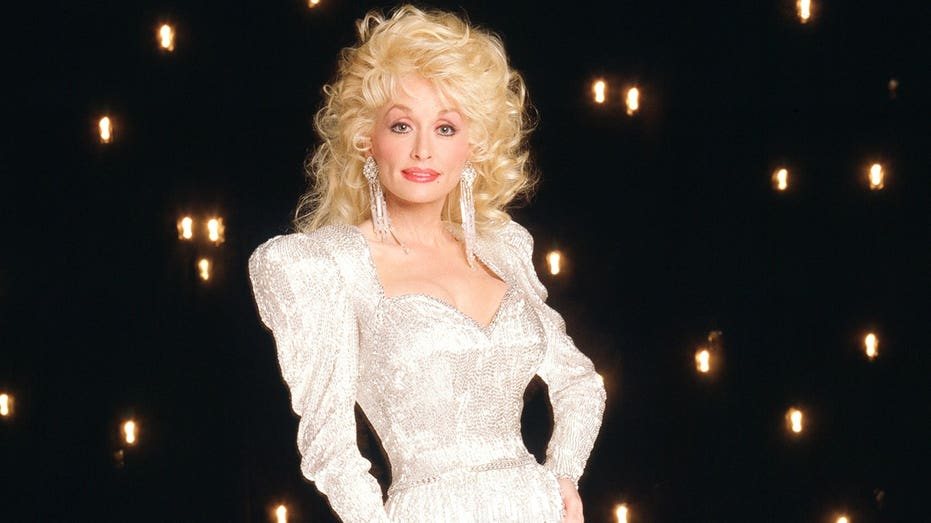
Dolly Parton was a force to be reckoned with from the start of her career, challenging social norms and breaking barriers for women in country music in ways that helped redefine what a female star in the genre could be. Throughout her life, Parton, who died Aug. 25 after a brief battle with cancer, helped expand how women were perceived not only in country music but across American culture, according to experts who spoke with Fox News Digital.
Dr. Tracy King, a chartered clinical psychologist, writer, and pop-culture commentator, said Parton followed pioneering women like Patsy Cline and Loretta Lynn who had already challenged expectations and proved that women's experiences belonged in country music. However, King noted that those women were still confined to a narrow narrative of specific roles, such as the respectable woman, the suffering wife, the attractive female, or the supporting partner to a more powerful man.
«Dolly helped expand the narrative,» King said. «She could be the glamorous star, serious songwriter, ambitious decision-maker, owner of her work and a brand manager of her public identity all at the same time. She did not have to remove her femininity, accent or background to become powerful.» King added that Parton's approach gave other women much more possibility, allowing them to be emotionally open without being seen as weak, commercially ambitious without being masculine, and visible without surrendering control of their stories.
Long before the rhinestones, platinum records, and entertainment empire, Parton was one of 12 children raised in a one-room cabin in rural Tennessee, where money was scarce but music was a constant. She told People in 1975, «I'll always be a country musician because I'm a country girl. My style is my soul and my feelings. I'll tell the world in my songs what I wouldn't have told my mother.» Parton turned the struggles and values of her childhood into the foundation of her songwriting.
«Dolly refused to treat the things that made her different as problems that needed correcting,» King said. «Her appearance became instantly recognizable, her voice very distinct and her background became central to the stories she told.» King pointed to Parton's song «Coat of Many Colors,» in which the homemade coat for which she was mocked also represented her mother's love. «Dolly acknowledged the shame and hurt, but she didn't allow the cruelest interpretation of that experience to become the only one,» King said. «This is what it means to reclaim your story. We cannot always prevent other people from judging us, but we can refuse to let their judgment become our identity.»
Parton's accent and background also helped create trust with her audience, King said, because people felt she remembered where she came from and had not reinvented herself by rejecting her earlier life. The Grammy Award winner also leaned heavily into her trademark appearance, refusing to accept the idea that femininity and authority were mutually exclusive. «Dolly understood the assumptions people made about her appearance and used humor to demonstrate that she knew exactly what they were thinking,» King said. «She was in on the joke, but she was never the joke.»
Parton consciously created her image rather than allowing the industry to create it for her, King said. The contrast between that image and her intelligence made other people's prejudice visible. «Women are still frequently told that authority must look restrained, serious and almost masculine,» King said. «Dolly rejected that. She did not change her appearance to prove she was intelligent; she made her intelligence impossible to deny and that femininity could run alongside and did not have to be denied.»
Professor Susan McClary, a professor of music at Case Western Reserve University, said Parton entered the industry with two strikes against her, only to turn both into strengths. «When Dolly Parton began her career, she had two strikes against her: she performed country music, a genre disdained by many listeners, and she presented herself in her attire and make-up as a cartoonish stereotype,» McClary said. «Through perseverance, talent, self-deprecating sense of humor, and generosity, she managed to win over a vast fanbase while never compromising her values.» McClary added that feminists who might have dismissed her appearance came to see her as a role model who insisted on creating and maintaining her own image.
Parton's determination to control her own identity extended far beyond her looks. Behind the larger-than-life image was a savvy songwriter and businesswoman equally determined to control her own work, building an entertainment empire on her own terms.
73