Trump Eyes Australia-Style Retirement Overhaul to Address Savings Crisis
President Donald Trump is considering adopting elements of Australia's retirement system, which mandates employer contributions to portable individual accounts, as a potential fix for America's broken retirement savings model.
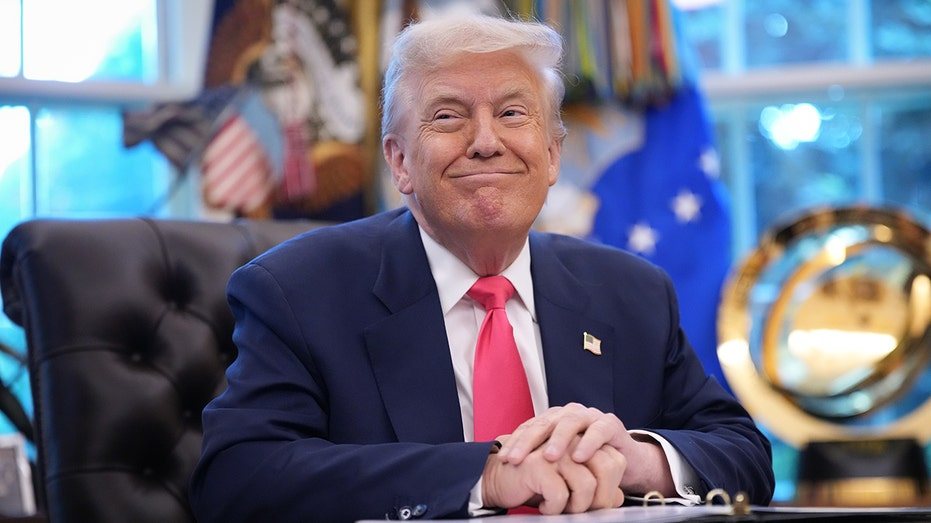
President Donald Trump has signaled interest in reshaping America's retirement system by drawing inspiration from Australia's mandatory savings model, a move that could represent the most significant shift in U.S. retirement policy since Social Security was enacted in 1935. Trump told reporters last week that he is looking «very strongly» at Australia's system, which requires employers to contribute a percentage of wages into individual retirement accounts known as «Super» accounts. The president emphasized that he is not seeking to copy the system outright but rather to adapt its most effective elements for American workers.
The current U.S. retirement framework was designed for an economy that has largely disappeared. Workers once spent decades with a single employer, earned a pension, and relied on Social Security benefits starting at age 65. Today, Americans change jobs every few years, millions work as freelancers or independent contractors, and many employers no longer offer traditional pensions or even 401(k) plans. The national personal savings rate has fallen to 2.6%, leaving millions of households financially vulnerable in retirement. Social Security's trust fund is projected to face insolvency by 2034, adding urgency to the search for solutions.
Under the Australian model, employers contribute a mandatory percentage of each worker's wages into a Super account that belongs to the employee, not the employer. The account follows the worker from job to job, and the investments remain in the market over time. This approach has helped Australia build one of the largest retirement savings pools in the world relative to its population, while also providing a steady flow of capital into financial markets. Trump has expressed interest in making the system «sharper» for American conditions, suggesting a tailored version rather than a direct transplant.
Proponents argue that an Americanized version could rest on three core principles: preserving Social Security as a foundational safety net, creating portable retirement accounts owned by workers rather than employers, and requiring or strongly encouraging automatic contributions into privately managed investment accounts. This structure would shift the retirement paradigm from reliance on future government benefits toward building personal wealth through decades of market investment. Supporters describe it as a pro-market approach that expands ownership and reduces dependence on government programs.
However, mandatory employer contributions are not without costs. Businesses would ultimately bear the expense, which could be passed on through slower wage growth, reduced hiring, higher prices, or lower profits. Small businesses operating on thin margins could face particular strain if Washington imposed a sudden 12% contribution requirement, as Australia has done. To mitigate these risks, analysts suggest phasing in contributions gradually over several years, starting at 1% and increasing incrementally. Tax credits for small businesses could offset some of the burden, and limited access to retirement funds for major life events, such as purchasing a first home, might increase the system's appeal.
Another consideration is coordination with existing proposals, such as the «Trump Accounts» concept, which would give every American investment assets from birth. Keeping investment management in the private sector rather than creating a government-controlled fund would preserve market competition while dramatically increasing retirement participation. Behavioral economics research supports the idea that automatic enrollment and contributions significantly boost savings rates, addressing a key weakness of the current voluntary system.
The proposal has drawn attention from both supporters and skeptics. Some labor advocates worry that mandatory contributions could function as a hidden payroll tax, while business groups caution against imposing new costs on employers during a period of economic uncertainty. Nevertheless, the administration appears to view the idea as a way to address three long-term challenges simultaneously: Social Security's financing pressures, the retirement savings gap, and the growing number of workers outside traditional employer-sponsored plans.
If implemented thoughtfully, the policy could fundamentally change who owns America's future. Instead of producing a generation dependent primarily on government checks, the system could enable millions more Americans to retire owning meaningful stakes in the companies, markets, and economy they helped build. As Trump continues to explore the Australian model, the debate over how to fix America's broken retirement system is likely to intensify, with significant implications for workers, businesses, and the broader economy.
99