President Donald Trump has a strong economic record to highlight, but he faces an uphill battle against negative media coverage and public skepticism. Key indicators show unemployment remains low, real wages are rising, the stock market is at high levels, and investment is booming. Inflation, while above the Federal Reserve's target of 2%, came down last month and is expected to recede further once oil prices stabilize. At 3.5% overall and 2.6% excluding volatile food and energy, inflation is significantly below the 4.95% average recorded under President Joe Biden.
One of the most striking developments is the improvement in income equality. The conservative Committee to Unleash Prosperity reports that during the first 16 months of Trump's current term, real incomes for the lowest 25% of earners increased by almost $2,100, while they actually shrank under Biden. The Bank of America Institute adds that total credit and debit card spending rose 6.3% year-over-year in June, the strongest growth in over four years, and that gaps in wage and spending growth across income groups have narrowed. This suggests that lower-income Americans are benefiting disproportionately from the current economic expansion.
Despite these positive trends, public perception remains gloomy. A CNBC survey found that 61% of the public is pessimistic about the current state of the economy and the outlook for the future. A Washington Post-Ipsos poll puts Trump's approval rating on the economy at just 33%. This disconnect is attributed to relentless negative coverage from liberal media outlets such as Bloomberg and CNBC, which focus on challenges like the high cost of living and expensive housing rather than the broader improvements. Additionally, some Republicans have struggled to effectively communicate the benefits of lower taxes and lighter regulations, which are central to Trump's agenda.
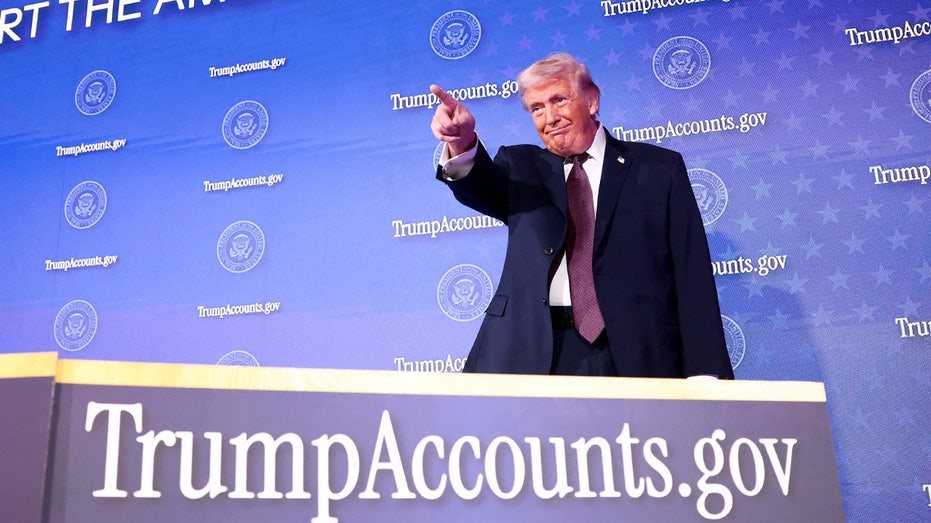
Among the administration's notable initiatives are the Trump accounts, which have already enrolled over 6 million children. These deferred investment accounts allow families to save for the future, with 1.4 million children qualifying for a $1,000 contribution from the Treasury. Dell CEO Michael Dell and his wife Susan donated $6.25 billion to the program, highlighting its potential to transform lives. Dell noted that when a child has even a small account in their name, it can lead to higher graduation rates, homeownership, and business creation. Trump also signed an executive order in April creating a low-cost Trump IRA, designed to give every American worker access to retirement savings similar to those enjoyed by federal employees. This could benefit the 40% of full-time workers and the vast majority of part-time workers who currently lack employer-sponsored retirement plans.
As the midterm elections approach, the state of the economy will be a decisive factor. Republicans are currently working on a $95 billion reconciliation bill focused on defense and farmer aid, but some lawmakers are pushing for a fourth reconciliation bill to address other priorities like housing relief. Proposals include indexing capital gains tax on home sales to inflation, which could loosen the housing supply by allowing older homeowners to sell without facing large tax bills. Democrats, meanwhile, have managed to position themselves as the party concerned with affordability, despite overseeing high inflation during the Biden years. They argue that GOP tax cuts benefit only the wealthy, but data shows that the Big Beautiful Bill's features—such as an expanded child tax credit, standard deduction, no tax on tips, and no tax on overtime—have provided significant relief to working-class families. Families earning between $15,000 and $30,000 saw tax cuts of 21%, the largest reduction of any income group.
To overcome the negative narrative, Trump and his allies need to aggressively promote these economic successes and deliver a final policy push before the elections. The midterms will determine whether the Trump agenda can continue or face obstruction from investigations and impeachment efforts. With the House and Senate in session and not due to reconvene until mid-September, this is a critical window for Republicans to shift public opinion and secure their legislative achievements.