Leica and Formula 1 Launch $9,950 Carbon Fiber Camera in First Global Licensing Deal
Leica Camera and Formula 1 have announced their first official global licensing partnership, centered on a special-edition Q3 43 camera built with carbon fiber and inspired by racing steering wheels. The $9,950 model debuts alongside a Los Angeles gallery show and events at the United States Grand Prix in Austin.
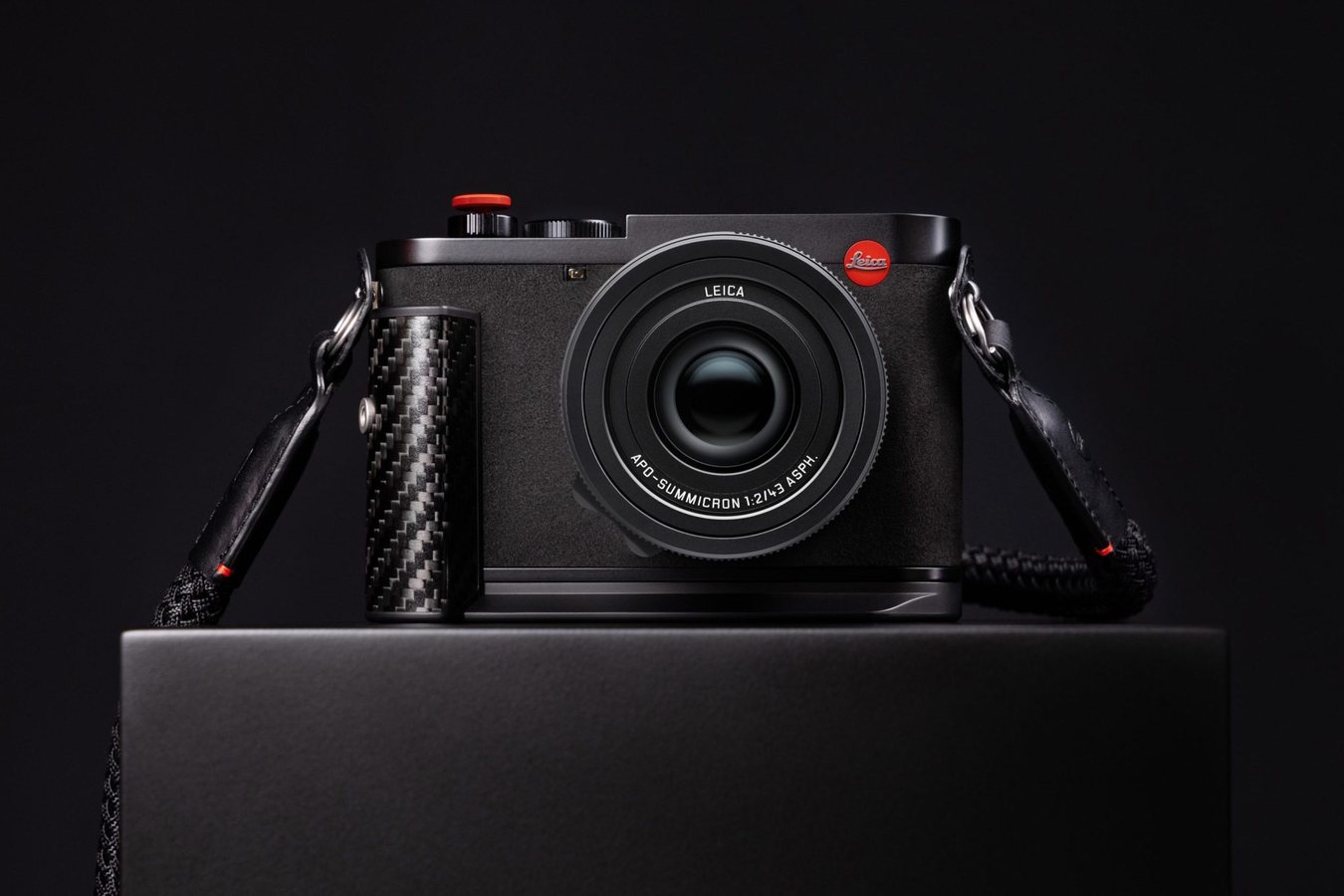
Leica Camera and Formula 1 have signed their first official global licensing agreement, a partnership that pairs the German camera maker with the racing series and produces a special-edition camera priced at $9,950. The deal covers Formula 1 as a whole rather than a single team, and it arrives with a gallery exhibition in Los Angeles and a slate of events tied to the United States Grand Prix in Austin this weekend.
The centerpiece is the Leica Q3 43 Formula 1 Edition, the first Leica camera to use carbon fiber. The material, which defines modern race cars because it is both light and rigid, covers the grip, the thumb rest and the soft-release button — the points a photographer touches most. The body is wrapped in a black covering modeled on a racing steering wheel, and the red accents on its buttons echo the color-coding Formula 1 teams use so drivers can locate controls quickly.
Mike Giannattasio, president of Leica Camera North America, said the overlap between the two worlds runs deeper than marketing. «There is such synergy between people who collect cameras and people who collect cars,» he said. «If you see people who are passionate about vintage cars or racing cars, and if they have anything other than a passenger in the seat next to them, eight out of 10 times it’s going to be a Leica camera.»
That connection is visible on the grid. Lewis Hamilton and Lando Norris have both been photographed with Leica cameras, and Norris maintains a separate Instagram account devoted to his photography. Giannattasio said the partnership was an easy call, though not everyone saw it immediately. When he described the deal to one contact, the reply was: «Mike: F1 and Leica? That’s a stretch.»
His case rests on how both products are made. A single Leica M rangefinder contains more than 150 pieces, he said, while an Formula 1 team spends months engineering and testing for a race that can be decided in a fraction of a second. He compared the two to Henri Cartier-Bresson’s idea of «the decisive moment,» the instant a photographer must be ready for. «Both photography and racing depend so much on preparation,» Giannattasio said. «While Formula 1 goes at incredible speed, and it may be really hard to stop the moment, photography helps someone who loves that craftsmanship and excellence stop the moment, so that it can be examined, remembered, celebrated.»
Both brands also trade on history. Formula 1 has raced since 1950, and Leica still produces film cameras such as the MP and M-A, which contain no digital components. Giannattasio said those models can be taken into extreme conditions, including the Antarctic, without freezing or breaking. Still, he argued that heritage only matters when it drives the product forward: «It’s heritage, but it’s not heritage for heritage’s sake. It’s heritage for innovation’s sake.»
Adapting carbon fiber to a camera required care, he said. The material had to be shaped so the camera still handled the way photographers expect and still looked unmistakably like a Leica. «You would ask a little child to draw a camera,» he said. «It’s going to be a rectangular box with a little round circle. It is literally quintessential.» The goal, he added, was a product «quintessentially iconic, immediately recognizable as a Leica camera» that nonetheless borrowed design cues and materials «that are big in the world of F1.»
Giannattasio came to Leica from luxury goods rather than photography. Raised in Astoria, Queens, he spent more than a decade at Montblanc, rising to president and CEO of Montblanc North America, and earlier worked on Christian Dior watches at LVMH. When he interviewed to lead Leica’s North American business in 2020, he said he was likely the only candidate with that background, and staff tested his knowledge of aperture and ISO after he started. «I love art, I love photography, I love culture, and I am here because I’m passionate about building this organization around those principles, not because I am the best photographer who interviewed for the role,» he said.
He draws a distinction between luxury and premium. «We don’t by any means consider ourselves a luxury brand. We are a premium brand, meaning we make the best optical equipment in the world.» What sets Leica apart, he said, is what it asks of its owners: most luxury brands require only money, while a Leica also demands time and intellect. «You need time in order to develop this relationship with your camera,» he said. «While we don’t position ourselves as a luxury brand, what we do in today’s world is quite luxurious.»
He links renewed interest in analog products to the pace of technology, including artificial intelligence. «In a world that continues to advance with artificial intelligence, I think there is a need to slow down to celebrate and be in the moment,» he said.
9