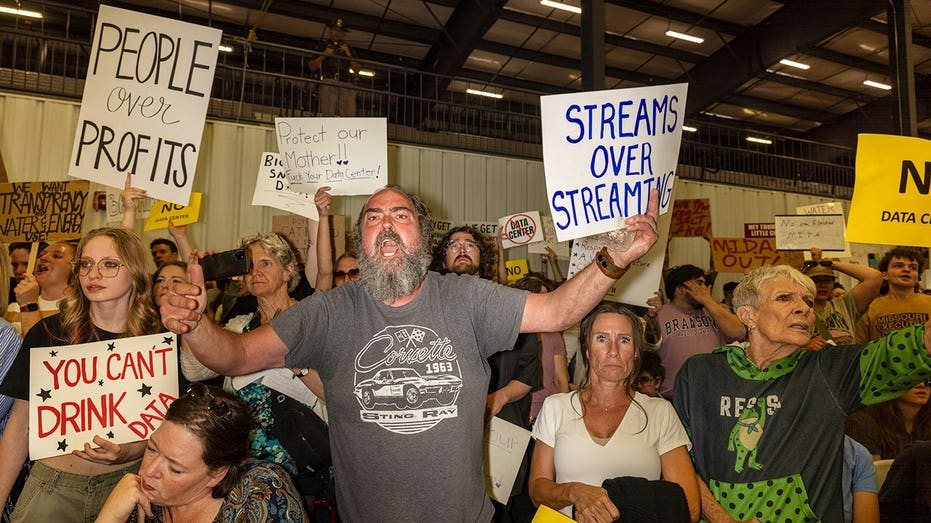
Local governments across the United States are increasingly imposing moratoriums and bans on new data centers, a trend that critics argue is jeopardizing the nation's economic future and national security. According to recent reports, nearly 80 jurisdictions have adopted temporary restrictions, while 14 other states are considering similar measures. The movement has drawn sharp criticism from business leaders and policy experts who warn that limiting data center development could cede a critical technological advantage to China in the global competition to dominate artificial intelligence.
Data centers are the backbone of the digital economy, supporting everything from cloud computing and streaming services to the vast computational demands of AI. The United States currently controls about 75 percent of the world's AI compute capacity, compared to China's 15 percent, but that lead is fragile. Proponents of the bans cite concerns over energy consumption, environmental impact, and strain on local infrastructure. However, opponents argue that these concerns are often exaggerated and that the economic and strategic costs of halting data center expansion far outweigh the perceived benefits.
In Georgia alone, a statewide ban could put an estimated 552,000 jobs and $850 million in tax revenue at risk, according to industry analysts. The economic ripple effects would extend beyond Big Tech, as data centers drive growth for startups, small businesses, and manufacturing sectors that rely on AI-powered tools. Experts project that AI and its supporting infrastructure could add 1.5 to 3.7 percent to U.S. gross domestic product annually, representing trillions of dollars in additional economic output over the coming decade.
National security implications are equally significant. The ongoing war in Ukraine has demonstrated the military value of AI, from autonomous drones to cyber threat detection and intelligence analysis. Data centers are essential for processing vast amounts of battlefield data and for maintaining the logistical and manufacturing capabilities needed to sustain military readiness. Critics of the ban movement argue that limiting data center growth would directly undermine the Defense Department's ability to modernize and compete with China's rapidly expanding AI military applications.
Despite these warnings, the anti-data-center campaign has gained traction in both blue and red states. New York is the only state to have enacted a formal construction moratorium, but legislatures in Florida, Oklahoma, Georgia, and a dozen other states are weighing similar proposals. While some restrictions are framed as temporary measures to study environmental effects, opponents fear they could become permanent if a major political party adopts the issue as a platform.
The debate comes at a time when the Trump administration has made AI dominance a national priority. However, the administration's stance on data center policy has been inconsistent. Some White House officials have expressed concern that overly restrictive local regulations could conflict with federal goals to accelerate AI development, though no coordinated federal response has emerged. Industry groups have urged the government to preempt local bans through federal legislation or executive action, arguing that a patchwork of state and local restrictions creates uncertainty for investors and threatens the United States' competitive edge.
Environmental groups counter that data centers consume enormous amounts of electricity and water, often relying on fossil fuels that exacerbate climate change. They point to community uprisings in Virginia and other regions where residents have fought new developments over noise, land use, and environmental justice concerns. However, industry advocates contend that modern data centers are increasingly energy-efficient and that many operators are investing in renewable energy to offset their carbon footprint. They also note that the economic benefits of data centers extend to local tax bases, funding schools, roads, and public services.
The stakes are high for the broader U.S. economy. AI is expected to transform industries from healthcare and finance to logistics and defense, and data centers are the critical infrastructure enabling that transformation. Without sufficient capacity, American companies may struggle to scale AI applications, opening the door for Chinese firms to capture global markets. Some analysts draw parallels to the industrial mobilization during World War II, arguing that restricting data center construction today would be akin to blocking the construction of tank and aircraft factories in 1941.
Local officials face a difficult balancing act between responding to community concerns and preserving long-term economic opportunity. In some cases, negotiations between developers and municipalities have resulted in agreements that include investments in local infrastructure, workforce training, and green energy projects. But in many instances, the opposition has been fierce and uncompromising, leading to lengthy legal battles and project cancellations.
As the AI race intensifies, the outcome of the data center debate could shape the technological and economic landscape for decades. Critics of the ban movement warn that the only winners from slowing American data center growth would be China and its state-controlled AI ambitions. They urge policymakers to look beyond short-term environmental grievances and recognize the existential importance of maintaining the infrastructure that underpins both economic prosperity and national security.
The coming months will test whether local and state governments can reconcile competing interests or whether the United States risks falling behind in the most critical technology of the 21st century.