
Europe cannot condemn Iran and then complain when US acts, former ambassador says
Former U.S. Ambassador Gordon Sondland argues that European leaders cannot simultaneously condemn Iran's nuclear and proxy threats while criticizing American military action, urging political unity and shared burden in confronting Tehran.
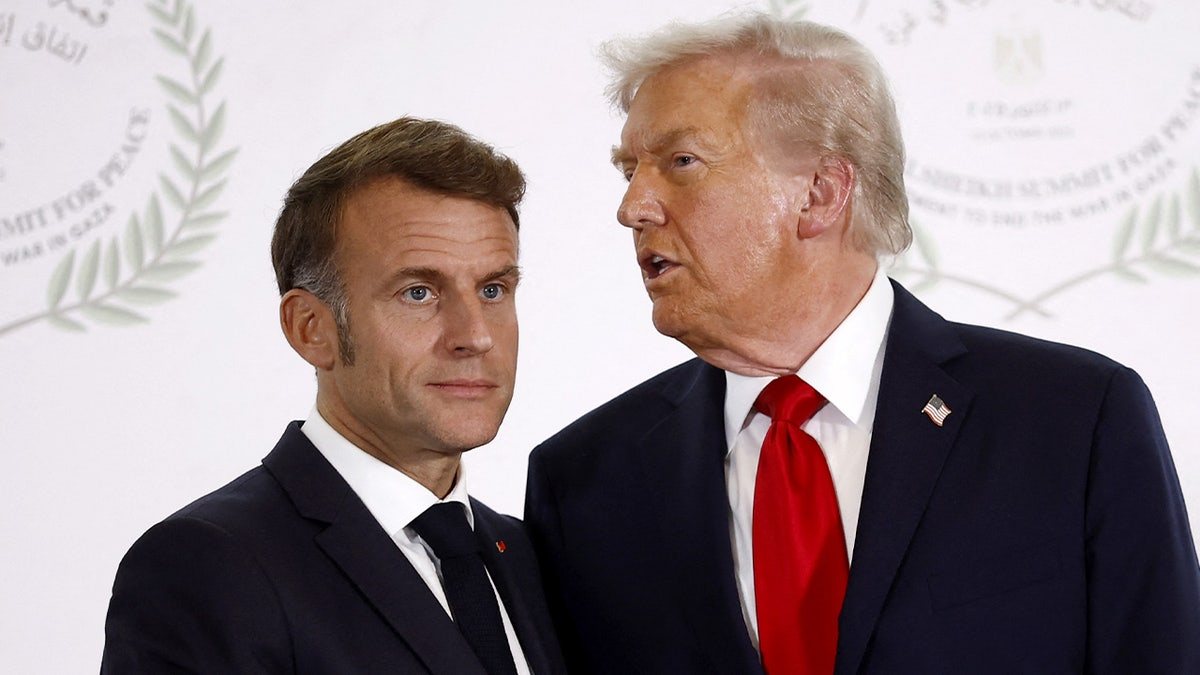
European governments have spent years warning that Iran must never be allowed to acquire a nuclear weapon, yet when President Donald Trump concluded that the threat required military action, much of Europe's response focused on whether European capitals had been sufficiently consulted. Former U.S. Ambassador to the European Union Gordon Sondland argues that this complaint is difficult to take seriously, given that European intelligence services have tracked Iran's nuclear program, missile development, terrorist networks and regional proxies for decades.
Sondland, writing in an opinion piece, contends that European leaders understood the direction of travel and knew the danger was growing. He asserts that Europe's preferred strategy has been to acknowledge the threat while avoiding hard decisions, waiting for the United States to take the lead, and then feigning surprise at the result. This arrangement, he says, is politically convenient, allowing European leaders to benefit from American power while distancing themselves from its use.
“Europe cannot have it both ways,” Sondland writes. “If Iran is a common threat to the democratic world, as European leaders have repeatedly said, then confronting it cannot remain principally an American responsibility.” He argues that Europe cannot rely on U.S. military power, criticize Washington for acting, and then expect to enjoy the security benefits without accepting any of the burdens.
The former ambassador emphasizes that the conflict is not merely President Trump's war or solely America's problem, but a challenge involving the security of the Western world. He notes that Iranian intelligence operations have reached European soil, Iranian-backed groups have threatened European citizens and interests, Iranian missiles increasingly place European territory within range, and European economies depend on maritime trade routes that Tehran has repeatedly threatened to disrupt.
“Passivity is not neutrality, and it does not purchase immunity,” Sondland writes. “Tehran is unlikely to distinguish between an American adversary and a European government that quietly benefits from American protection.”
Sondland argues that the most important contribution Europe can make now does not require firing a shot or spending another euro, but rather political unity. He calls for no public daylight between the U.S. and its principal European allies over strategic objectives, warning that public equivocation, procedural complaints and ritual calls for “restraint by all sides” are interpreted in Tehran as evidence that the Western alliance can be divided.
“The greatest strategic gift the West could give Tehran is the appearance of division,” he writes. “The greatest deterrent it can present is the opposite.”
Sondland specifically calls on European Commission President Ursula von der Leyen, German Chancellor Friedrich Merz, French President Emmanuel Macron, Italian Prime Minister Giorgia Meloni and British Prime Minister Keir Starmer to state clearly that the U.S. and Europe share the same objectives and will remain aligned until they are achieved.
He argues that those objectives must extend beyond the nuclear issue. While preventing Iran from obtaining a nuclear weapon is essential, ending Iran's reliance on proxy armies is equally important. For decades, Tehran has used Hezbollah, Hamas, the Houthis, Iraqi militias and other armed groups to attack adversaries while maintaining a thin layer of deniability. Proxy warfare has allowed Iran to impose enormous costs on the region without accepting the consequences of conventional state aggression.
“A strategy that addresses nuclear weapons while permitting Iran's proxy network to remain intact would solve only half the problem,” Sondland writes. He argues that Tehran could continue destabilizing neighboring countries, attacking shipping, threatening Israel, striking American forces and intimidating European governments without possessing a nuclear bomb.
The proper Western objective, according to Sondland, should be straightforward: no nuclear weapon and no Iranian-controlled proxy network operating with impunity. Europe's first responsibility is to support that objective publicly and without qualification. Its second is to provide practical assistance, including making allied bases fully available without political caveats, expanding intelligence sharing, logistics support, missile-defense cooperation and maritime surveillance.
Sondland's commentary comes as the Trump administration's 60-day Iran deal reaches its halfway mark and as ceasefire efforts in the region have collapsed into escalating conflict. The former ambassador's remarks reflect ongoing tensions between the U.S. and European allies over how to address Iran's nuclear ambitions and regional activities.